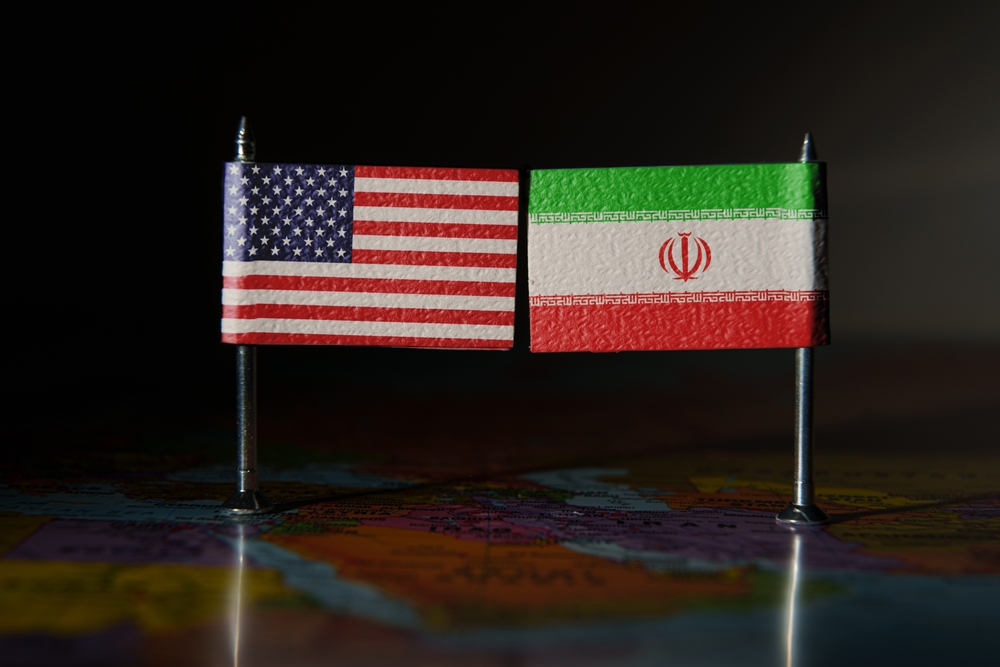
Professor Chris Elliott reflects on the impact of the evolving war in the middle east to UK food security, reaffirming his belief that urgent policy action is needed to prioritise the longevity of our food system.
The recent escalation of conflict between the US, Israel and Iran is without doubt a major geopolitical crisis. And as is the case with many international confrontations, its consequences will reach far beyond the growing geographical theatre of war. For the UK, the implications lie not in direct military involvement, which the government has clearly, and in my opinion rightly, stayed away from, but in the vulnerability of our energy and food systems.
The current conflict provides yet another illustration of the fragility of our food system.”
Giving the situation its correct context: the UK is not facing imminent food shortages or major price hikes. Our retailers are seasoned professionals at dealing with shocks and our supply chains have been changing to better cope with the ever-increasing stresses that present themselves with alarming regularity. However, the question remains: for how long can the evolving food system remain functioning to requisite levels under the ever-mounting pressures of sustained shocks? The current conflict – and in particular the immediate disruption to shipping through the Strait of Hormuz – provides yet another illustration of that fragility.
The Strait of Hormuz is one of the most strategically significant maritime chokepoints in the world. Approximately one-fifth of globally traded oil and a significant proportion of liquefied natural gas transit this narrow corridor between the Persian Gulf and the Gulf of Oman. When shipping through the strait is disrupted or blocked, the consequences are felt almost instantly in global energy markets.
The immediate impact of the current blockage has been the predicted spike in oil and gas prices, accompanied by increased insurance premiums for shipping and heightened market volatility. Even the temporary suspension of tanker movements sends a powerful signal to commodity markets. Traders price in risk quickly, and that risk premium rapidly translates into higher wholesale energy costs.
For food systems, this matters enormously as energy prices are central to the cost base of virtually everything we eat. Fuel powers farm machinery; natural gas underpins fertiliser manufacture; refrigeration and cold storage rely on electricity; and processing plants, distribution hubs and retail outlets all consume energy at scale. When oil and gas prices surge abruptly, these costs cascade through every stage of the supply chain.
There is also another important impact to consider. Disruption to shipping through Hormuz causes ships to divert via longer and more expensive routes wherever possible, resulting in increased transit times and freight costs, at best. This affects not only oil tankers but also fertiliser shipments and other bulk commodities such as wheat and vegetable oils that originate in or transit through Gulf states.
The linkage between energy and fertiliser deserves further analysis. Nitrogen fertiliser production is heavily dependent on natural gas and when gas prices rise sharply, fertiliser plants often reduce output. Reduced supply then in turn pushes fertiliser prices upwards, raising costs for farmers worldwide. Higher fertiliser costs can result in lower application rates and more fraud in terms of adulterated and counterfeit products entering the market. Collectively these impacts can cause reduced yields in subsequent seasons, tightening global supplies of livestock feed, cereals and other important commodities.
Investment in domestic production, renewable energy integration within agriculture and strategic risk monitoring must become central to policy.”
The UK imports nearly half of its food and a higher proportion of fresh produce, especially outside the domestic growing season. This is something I have written about many times previously. This reliance on international trade does provide diversity of supply and range in produce available but greatly reduces our tolerance for disruption. Our retail system, despite trying constantly to adapt to changing situations, is still very much optimised for efficiency and just-in-time logistics to minimise cost increases. Under continuous stress, the buffers built into the system are reducing markedly and to a very worrying extent.
Retailers will, of course, substitute supply sources, but the economics of supply and demand also kick in, meaning increased prices are all but inevitable. Thus consumers are ultimately faced with higher shelf prices and potentially significantly reduced choices.
The lesson from the current crisis is not that global trade should be abandoned –this is an impossibility for the UK and many other developed countries – rather, resilience must be strengthened as a national priority. Investment in domestic production, renewable energy integration within agriculture and strategic risk monitoring must become central to policy.
As I write this article the conflict is escalating; more missiles in the air, more countries becoming involved and more lives lost. From observing the unfolding situation it is impossible to predict if further escalation or abatement lies ahead. We must hope for the latter. What is certain is that it represents yet another warning that we cannot remain complacent about always having abundant and affordable food in our supermarkets.
I have no doubt that the UK possesses the expertise and capability to build a more robust food system. The challenge now is to ensure that repeated shocks become catalysts for change rather than recurring surprises.
It is time for the UK Government to establish a dedicated Department of National Food Security, empowered to set and deliver a coherent, cross-government strategy that will safeguard the nation’s food supply in an era of escalating geopolitical instability, climate disruption and systemic global shocks.”
There is no shortage of good models to learn from in different parts of the world. In Europe, Finland, Norway and Switzerland have a range of initiatives that the UK would do well to follow. I think it is not by coincidence that many of the Middle East countries have major strategic projects underway to bolster their own national food security situations. I’m involved in several of these and can see what a combination of foresight, vision and investment can deliver.
I truly believe this moment should mark a turning point: it is time for the UK Government to establish a dedicated Department of National Food Security, empowered to set and deliver a coherent, cross-government strategy that will safeguard the nation’s food supply in an era of escalating geopolitical instability, climate disruption and systemic global shocks.


цена монтажа системы газового пожаротушения цена монтажа системы газового пожаротушения .