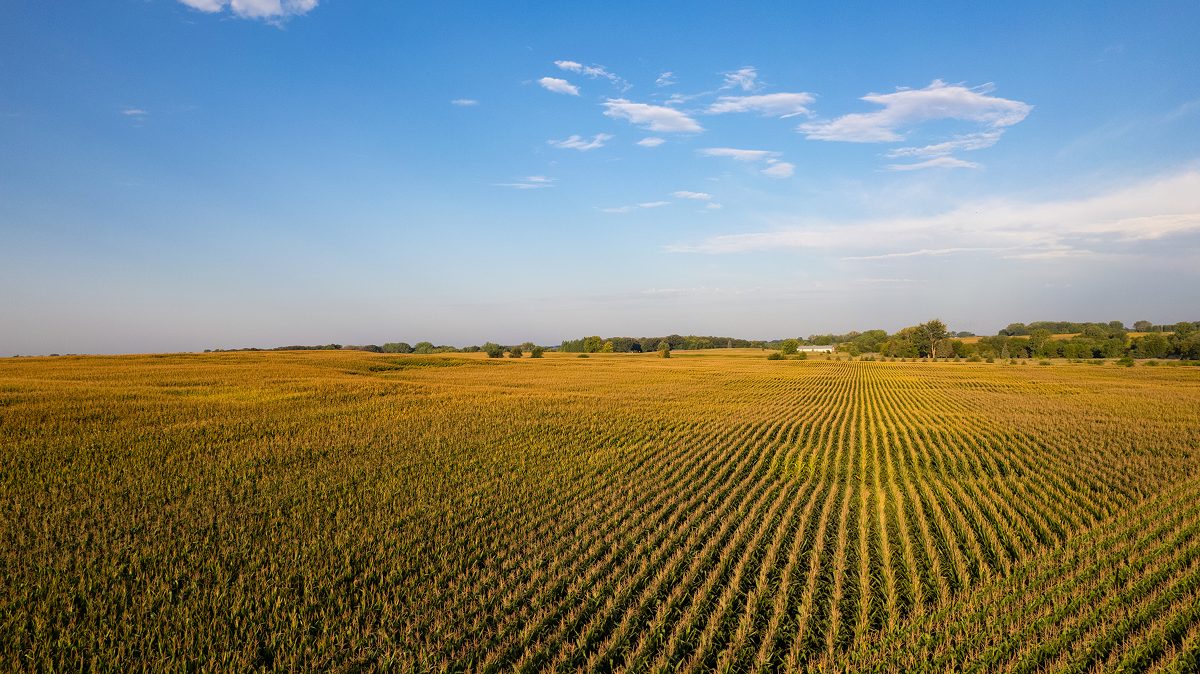
Economist Impact’s Resilient Food Systems Index reveals major global disparities, highlighting urgent infrastructure, climate and nutrition challenges facing food systems.

Major gaps in global food system resilience could threaten efforts to feed ten billion people by 2050, according to a new index from Economist Impact.
The inaugural Resilient Food Systems Index (RFSI), supported by Cargill, ranks 60 countries across four pillars of food system resilience, revealing a 42-point gap between the most resilient system, Portugal, and the least resilient, the Democratic Republic of Congo. The findings suggest that while no country has yet achieved full resilience, nearly half sit in a “middle zone” with scores between 56 and 71 out of 100, highlighting substantial room for improvement.
The research also shows that affordability alone is not enough to guarantee resilient food systems. Although food affordability was the strongest-performing pillar globally, inequalities in access to nutritious diets remain widespread. In 62 percent of countries studied, the cheapest healthy diet consumes almost two-thirds of the poorest households’ income.
Jonathan Birdwell, global head of policy and insights at Economist Impact, said:
The data show food systems are deeply interconnected: when countries implement targeted, coordinated action across key resilience levers, the benefits ripple across entire systems.
But if these interventions fall short or happen in isolation, overall system resilience will deteriorate.”
The Index evaluates 60 countries using 71 qualitative and quantitative indicators across four pillars: affordability, availability, quality and safety, and sustainability and adaptation.
Despite rising living costs globally, food affordability recorded the strongest performance with an average score of 71.8. However, stark disparities persist between income groups. High-income countries scored 81.1 compared with just 34.9 in low-income economies. Food prices have also risen fastest in lower-income markets, increasing by 23.1 percent over the past five years.
Infrastructure and climate resilience remain key vulnerabilities
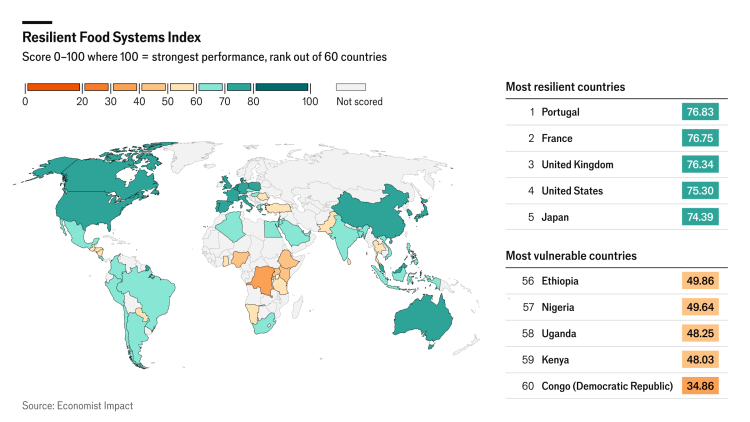
Resilient Food Systems Index map. Credit: Economist Impact
Infrastructure emerged as a major bottleneck for food system resilience and supply chain efficiency. Transportation and logistics systems scored an average of just 56.8, limiting supply chain performance and contributing to food loss. The report estimates that 13.2 percent of food is lost before reaching retail, while a further 19 percent is wasted at household level.
While many governments are supporting agricultural technology innovation, the report notes that basic infrastructure remains insufficient to scale these solutions. Access to reliable electricity and internet connectivity in many countries remains far below the levels required to deliver system-wide impact.
Climate resilience also emerged as a major vulnerability. Climate risk responsiveness – measuring how effectively countries anticipate, manage and recover from climate shocks – was the weakest performing pillar, with an average score of 56.4.
Although research into low-emission agriculture and sustainable practices scored relatively highly, agriculture-specific mitigation and adaptation efforts averaged just 34 points. The Index suggests that promising research is not yet translating into widespread practical action.
Global agricultural trade was also highlighted as a stabilising force in food system resilience. The fifteen largest exporting countries recorded an average resilience score of 71, indicating their outsized role in maintaining global market stability.
According to the report, expanding trade partnerships and diversifying supply chains for nutrient-rich foods could improve both affordability and dietary diversity. Investment in digital connectivity, transport networks and cold chain infrastructure could further reduce food loss, expand market access for farmers and accelerate innovation adoption across supply chains.
Brian Sikes, Board Chair and CEO of Cargill, added:
Everyone needs dependable access to nutritious, affordable food.
This research offers valuable insights that can help strengthen the world’s food systems. Cargill is proud to do our part to advance this important work, innovating with farmers, customers, and partners across our global supply chains to help ensure food moves where it’s needed, when it’s needed.”
The Resilient Food Systems Index forms part of The Food Imperative, Economist Impact’s multi-year programme exploring the future of global food systems.


какой оптимальный недорогой способ доставки выбрать при небольшом заказе,если не почта?посоветуйте… купить Кокаин, Бошки, Марихуану, Мефедрон второй вопрос к товарищу под ником Leks:И ещё когда можно будет сделать первый заказ в январе?
Как выгодно купить Айфон в Уфе?
¦ Почему стоит выбрать покупку Айфона именно в Уфе?
айфон 17 про купить в уфе
Выбирая устройство Apple, важно учитывать не только цену, но и удобство приобретения. Если вы находитесь в Уфе и хотите приобрести новый смартфон, предлагаем рассмотреть преимущества покупки прямо в вашем городе.
¦ Где лучше всего купить iPhone в Уфе?
айфон 17 про купить уфа
Существует несколько проверенных способов приобретения качественного устройства от Apple:
1. Официальные магазины: Например, фирменные точки продаж Apple позволяют убедиться в оригинальности товара и получить консультацию опытных продавцов-консультантов.
айфон аир уфа
2. Крупные сетевые ритейлеры: Такие сети предлагают широкий ассортимент моделей и предоставляют гарантии качества продукции.
3. Интернет-магазины: Удобный способ покупки, позволяющий сравнить цены и характеристики устройств перед покупкой.
4. Местные торговые площадки: Некоторые небольшие местные продавцы также могут предложить выгодные условия приобретения гаджетов Apple.
¦ Советы по выбору оптимального варианта
При выборе места, где купить iPhone, обратите внимание на следующие моменты:
– Проверьте наличие гарантийного обслуживания и сервисных центров.
– Обратите внимание на дополнительные аксессуары и услуги, предоставляемые магазином.
– Оцените стоимость доставки и возможные скидки при покупке онлайн.
¦ Заключение
Таким образом, покупка нового смартфона от Apple становится проще благодаря разнообразию вариантов в Уфе. Воспользуйтесь нашим руководством, чтобы сделать правильный выбор и насладиться всеми преимуществами современных технологий!
¦ Ключи для SEO оптимизации:
– купить айфон в уфе
– купить айфон уфа
– iphone купить в уфе
– iphone купить уфа
– купить iphone уфа
где купить айфон в уфе
https://applemarketrf.ru
Как выгодно купить Айфон в Уфе?
¦ Почему стоит выбрать покупку Айфона именно в Уфе?
iphone 17 air купить уфа
Выбирая устройство Apple, важно учитывать не только цену, но и удобство приобретения. Если вы находитесь в Уфе и хотите приобрести новый смартфон, предлагаем рассмотреть преимущества покупки прямо в вашем городе.
¦ Где лучше всего купить iPhone в Уфе?
айфон 17 купить в уфе дешево
Существует несколько проверенных способов приобретения качественного устройства от Apple:
1. Официальные магазины: Например, фирменные точки продаж Apple позволяют убедиться в оригинальности товара и получить консультацию опытных продавцов-консультантов.
купить айфон уфа
2. Крупные сетевые ритейлеры: Такие сети предлагают широкий ассортимент моделей и предоставляют гарантии качества продукции.
3. Интернет-магазины: Удобный способ покупки, позволяющий сравнить цены и характеристики устройств перед покупкой.
4. Местные торговые площадки: Некоторые небольшие местные продавцы также могут предложить выгодные условия приобретения гаджетов Apple.
¦ Советы по выбору оптимального варианта
При выборе места, где купить iPhone, обратите внимание на следующие моменты:
– Проверьте наличие гарантийного обслуживания и сервисных центров.
– Обратите внимание на дополнительные аксессуары и услуги, предоставляемые магазином.
– Оцените стоимость доставки и возможные скидки при покупке онлайн.
¦ Заключение
Таким образом, покупка нового смартфона от Apple становится проще благодаря разнообразию вариантов в Уфе. Воспользуйтесь нашим руководством, чтобы сделать правильный выбор и насладиться всеми преимуществами современных технологий!
¦ Ключи для SEO оптимизации:
– купить айфон в уфе
– купить айфон уфа
– iphone купить в уфе
– iphone купить уфа
– купить iphone уфа
купить айфон 17 про уфа авито
https://applemarketrf.ru/catalog/iphone/iphone-17-pro-max/
Баня в Ярославле: наслаждение теплом и уютом
сауна липецка
Баня в Ярославле – это не просто способ расслабиться и отдохнуть, но и возможность окунуться в атмосферу старинных русских традиций. Город славится своими банями, каждая из которых имеет свою уникальную историю и особенности.
¦ История бань в Ярославле
История бань в Ярославле насчитывает сотни лет. Первые упоминания о банях относятся к временам Древней Руси, когда они были неотъемлемой частью повседневной жизни горожан. Сегодня бани Ярославля продолжают радовать местных жителей и гостей города своей аутентичностью и комфортом.
сауна Челябинск
¦ Бани Ярославля: разнообразие выбора
В Ярославле можно найти бани на любой вкус и кошелек. От традиционных русских парных до современных саун с бассейнами и джакузи. Каждая баня имеет свои уникальные черты, которые делают посещение незабываемым.
¦ Русская баня
сауны Ростова
Русская баня в Ярославле – это классика жанра. Здесь можно насладиться горячим паром, вениками и ароматами трав. Многие туристы специально приезжают в город, чтобы испытать на себе целебные свойства русской бани.
¦ Финская сауна
Финская сауна в Ярославле также пользуется популярностью. Сухой жар и низкая влажность позволяют глубоко прогреть тело, улучшая кровообращение и общее самочувствие.
¦ Турецкий хамам
Для любителей восточных традиций в Ярославле есть турецкий хамам. Мягкое тепло и влажный воздух создают ощущение полного расслабления и покоя.
¦ Советы по выбору бани в Ярославле
При выборе бани в Ярославле стоит учитывать несколько факторов:
– Тип бани: русская баня, финская сауна или турецкий хамам?
– Удобства: наличие бассейна, душа, комнаты отдыха.
– Цены: стоимость посещения может варьироваться в зависимости от уровня комфорта и дополнительных услуг.
¦ Заключение
Посещение бани в Ярославле – это отличный способ провести время с пользой для здоровья и души. Независимо от того, предпочитаете ли вы традиционную русскую баню или современную финскую сауну, в Ярославле найдется вариант, который вас порадует.
Дополнительные ключи: бани Ярославля, баня Ярославля, бани Ярославль, сауна в Ярославле, сауна Ярославля, сауна Ярославль, сауны в Ярославле, сауны Ярославля, сауны Ярославль
бани
https://dai-zharu.ru/tolyatti/
Современный мир высоких технологий предлагает большое разнообразие вариантов регистрации доменных имен. Среди популярных сочетаний выделяется простая и выразительная комбинация `slon1`. Именно такая последовательность стала основой множества доменных адресов, привлекающих внимание пользователей. Простота восприятия делает её идеальной для брендов и веб-ресурсов различного назначения.
slon9 cc
Одним из интересных направлений стало использование национального домена верхнего уровня (.cc). Таким образом появилось популярное сочетание **slon1.cc**, которое сочетает простую и доступную ассоциацию со словом «слон» и одновременно обозначает принадлежность ресурса к определённой географической зоне. Такое решение способствует быстрому восприятию и идентификации сайта пользователями.
кракен тг ссылка
Еще одним вариантом стал вариант **slon1.at**, в котором подчеркнута связь с австрийским сегментом сети Интернет. Такой выбор тоже имеет свою специфику и добавляет дополнительные смыслы в восприятие бренда. Благодаря своим уникальным характеристикам этот тип домена активно используется компаниями, ориентированными на европейский рынок.
slon1 cc
Часто владельцы ресурсов выбирают и сокращённую форму записи своего имени. К примеру, такое написание, как **slon1cc**, придаёт сайту дополнительный шарм и облегчает процесс запоминания. Подобная форма часто встречается в международной практике брендирования и отражает общую тенденцию упрощения структуры именования.
кракен ссылку где
В заключение отметим ещё одну разновидность написания домена — **slon1сс**. Здесь упор сделан на двойное повторение буквы «с», что создаёт особое звучание и запоминающийся эффект. Такая игра букв усиливает привлекательность домена и выделяет ресурс среди прочих аналогичных предложений.
slon6 cc
https://slon5at.net
slon7 at
seo кейсы seo-kejsy13.ru .
Современный мир высоких технологий предлагает большое разнообразие вариантов регистрации доменных имен. Среди популярных сочетаний выделяется простая и выразительная комбинация `slon1`. Именно такая последовательность стала основой множества доменных адресов, привлекающих внимание пользователей. Простота восприятия делает её идеальной для брендов и веб-ресурсов различного назначения.
slon7 cc
Одним из интересных направлений стало использование национального домена верхнего уровня (.cc). Таким образом появилось популярное сочетание **slon1.cc**, которое сочетает простую и доступную ассоциацию со словом «слон» и одновременно обозначает принадлежность ресурса к определённой географической зоне. Такое решение способствует быстрому восприятию и идентификации сайта пользователями.
кракен ссылка onion
Еще одним вариантом стал вариант **slon1.at**, в котором подчеркнута связь с австрийским сегментом сети Интернет. Такой выбор тоже имеет свою специфику и добавляет дополнительные смыслы в восприятие бренда. Благодаря своим уникальным характеристикам этот тип домена активно используется компаниями, ориентированными на европейский рынок.
kraken зеркала ссылка
Часто владельцы ресурсов выбирают и сокращённую форму записи своего имени. К примеру, такое написание, как **slon1cc**, придаёт сайту дополнительный шарм и облегчает процесс запоминания. Подобная форма часто встречается в международной практике брендирования и отражает общую тенденцию упрощения структуры именования.
кракен список ссылок и зеркал
В заключение отметим ещё одну разновидность написания домена — **slon1сс**. Здесь упор сделан на двойное повторение буквы «с», что создаёт особое звучание и запоминающийся эффект. Такая игра букв усиливает привлекательность домена и выделяет ресурс среди прочих аналогичных предложений.
kraken market ссылка
https://slon4cc.com
кракен ссылка kraken
Pope Leo XIV celebrated the first Christmas since his election by denouncing the suffering of people of Gaza – taking shelter in tents from the “rain, wind and cold” – and by calling for the guns to fall silent in Ukraine.
mellstroy
On Christmas Day, the first US-born pope, offered the traditional “Urbi et Orbi” blessing (“To the City and to the World”) from the balcony of St Peter’s, surveying a world speckled with conflicts from Yemen to Myanmar, and calling for compassion towards those who have fled their homelands to seek a future in Europe and America.
мелстрой casino
Leo, who was elected on May 8, said Thursday that Jesus Christ is “our peace” because he “shows us the way to overcome conflicts, whether interpersonal or international. With his grace, we can and must each day our part to reject hatred, violence and opposition, and to practice dialogue, peace and reconciliation.”
mellstroy
The pontiff began by asking for “justice, peace and stability” for Lebanon, the Palestinian territories, Israel and Syria. Later, he said that, by becoming man, “Jesus took upon himself our fragility,” allowing him to identify “with those who have nothing left and have lost everything, like the inhabitants of Gaza.”
Leo celebrates Christmas Holy Mass at the Vatican.
Leo celebrates Christmas Holy Mass at the Vatican. Yara Nardi/Reuters
Leo holds an incent burner at St Peter’s Basilica.
Leo holds an incent burner at St Peter’s Basilica. Tiziana Fabi/AFP/Getty Images
The pope’s first Christmas since his election took place in wet and cold conditions, but that failed to deter large crowds from coming out to hear his message.
Earlier during Mass, he asked how, at Christmas, “can we not think of the tents in Gaza, exposed for weeks to rain, wind and cold.” With more than 400,000 homes destroyed during Israel’s war against Hamas, Gazans are being forced to choose this winter between living in tents exposed to the elements or living inside buildings that could collapse any minute.
“Fragile is the flesh of defenseless populations, tried by so many wars, ongoing or concluded, leaving behind rubble and open wounds,” Leo said. He quoted an Israeli poet, Yehuda Amichai, who called for peace to blossom “like wildflowers.”
Related article
The acting Latin Patriarch of Jerusalem Pierbattista Pizzaballa attends a morning Mass at Saint Catherine’s Church, in the Church of the Nativity, in Bethlehem, in the Israeli-occupied West Bank December 25, 2025. REUTERS/Mussa Qawasma
Christmas celebrated once again in Bethlehem but West Bank suffering persists
Later during his Christmas message, he called for compassion towards those “who are fleeing their homeland to seek a future elsewhere, like the many refugees and migrants who cross the Mediterranean or traverse the American continent.” He offered Christmas greetings in different languages including Italian, English, Arabic, Chinese, Polish.
Since his election, Leo has highlighted the plight of those suffering of those in Gaza, and has been outspoken by calling for the better treatment of migrants. In his first major interview in September, the American pope voiced concern over “some things” happening in the country of his birth, highlighting the significance of a letter his predecessor, Pope Francis, had sent to US bishops earlier this year, rebuking the administration’s deportation plans.
мелстрой казино
https://https-mellstroy.com
Ищете качественные USB-флешки с логотипом?Мы предлагаем широкий выбор USB-накопителей с индивидуальным нанесением логотипа для компаний и брендов. Закажите USB флешка с логотипом, чтобы подчеркнуть уникальность вашего бизнеса.
[url=https://kir.el-gifts.ru/product/tovary-dlya-otdykha-i-turizma/avtomobilnye-aksessuary/]Аксессуары в Калуге [/url]
У нас есть USB с логотипом SilverMedia, а также USB с логотипом компании — идеально для корпоративных подарков и промо-акций. Мы выполняем нанесение логотипа на USB любой сложности, обеспечивая высокое качество и долговечность.
[url=https://ast.el-gifts.ru/product/korporativnaya-odezhda/aksessuary/]Антистрессы в Ижевске [/url]
Если вам нужны USB флешки micro-USB купить или USB флешки OTG купить, у нас вы найдете модели, которые подойдут для любых устройств. Также предлагаем USB флешки двухсторонние купить — удобные и практичные.
[url=https://rzn.el-gifts.ru/product/tovary-dlya-doma/aksessuary-i-sredstva-dlya-ukhoda/]Аксессуары и средства для ухода в Самаре [/url]
Для тех, кто ценит стиль и надежность, у нас есть металлические USB флешки купить — прочные и с элегантным дизайном. Все наши USB флешки с логотипом доступны для заказа с индивидуальной гравировкой или печатью.
[url=https://perm.el-gifts.ru/product/tovary-dlya-otdykha-i-turizma/avtomobilnye-aksessuary/]Антистрессы в Кирове [/url]
Закажите USB флешки с логотипом прямо сейчас и получите качественный продукт, который подчеркнет ваш бренд!
[url=https://klg.el-gifts.ru/product/tovary-dlya-otdykha-i-turizma/avtomobilnye-aksessuary/]Аксессуары в Москве [/url]
https://izh.el-gifts.ru/product/tovary-dlya-doma/aksessuary-i-sredstva-dlya-ukhoda/
Аксессуары в Туле
Pope Leo XIV celebrated the first Christmas since his election by denouncing the suffering of people of Gaza – taking shelter in tents from the “rain, wind and cold” – and by calling for the guns to fall silent in Ukraine.
[url=https://mullstroy.com]mellstroy[/url]
On Christmas Day, the first US-born pope, offered the traditional “Urbi et Orbi” blessing (“To the City and to the World”) from the balcony of St Peter’s, surveying a world speckled with conflicts from Yemen to Myanmar, and calling for compassion towards those who have fled their homelands to seek a future in Europe and America.
[url=https://mellstream.com]мелстрой казино[/url]
Leo, who was elected on May 8, said Thursday that Jesus Christ is “our peace” because he “shows us the way to overcome conflicts, whether interpersonal or international. With his grace, we can and must each day our part to reject hatred, violence and opposition, and to practice dialogue, peace and reconciliation.”
[url=https://mellstroy.social]mellstroy[/url]
The pontiff began by asking for “justice, peace and stability” for Lebanon, the Palestinian territories, Israel and Syria. Later, he said that, by becoming man, “Jesus took upon himself our fragility,” allowing him to identify “with those who have nothing left and have lost everything, like the inhabitants of Gaza.”
Leo celebrates Christmas Holy Mass at the Vatican.
Leo celebrates Christmas Holy Mass at the Vatican. Yara Nardi/Reuters
Leo holds an incent burner at St Peter’s Basilica.
Leo holds an incent burner at St Peter’s Basilica. Tiziana Fabi/AFP/Getty Images
The pope’s first Christmas since his election took place in wet and cold conditions, but that failed to deter large crowds from coming out to hear his message.
Earlier during Mass, he asked how, at Christmas, “can we not think of the tents in Gaza, exposed for weeks to rain, wind and cold.” With more than 400,000 homes destroyed during Israel’s war against Hamas, Gazans are being forced to choose this winter between living in tents exposed to the elements or living inside buildings that could collapse any minute.
“Fragile is the flesh of defenseless populations, tried by so many wars, ongoing or concluded, leaving behind rubble and open wounds,” Leo said. He quoted an Israeli poet, Yehuda Amichai, who called for peace to blossom “like wildflowers.”
Related article
The acting Latin Patriarch of Jerusalem Pierbattista Pizzaballa attends a morning Mass at Saint Catherine’s Church, in the Church of the Nativity, in Bethlehem, in the Israeli-occupied West Bank December 25, 2025. REUTERS/Mussa Qawasma
Christmas celebrated once again in Bethlehem but West Bank suffering persists
Later during his Christmas message, he called for compassion towards those “who are fleeing their homeland to seek a future elsewhere, like the many refugees and migrants who cross the Mediterranean or traverse the American continent.” He offered Christmas greetings in different languages including Italian, English, Arabic, Chinese, Polish.
Since his election, Leo has highlighted the plight of those suffering of those in Gaza, and has been outspoken by calling for the better treatment of migrants. In his first major interview in September, the American pope voiced concern over “some things” happening in the country of his birth, highlighting the significance of a letter his predecessor, Pope Francis, had sent to US bishops earlier this year, rebuking the administration’s deportation plans.
mellstroy casino
https://mellstroycomcasino.com
Современный мир высоких технологий предлагает большое разнообразие вариантов регистрации доменных имен. Среди популярных сочетаний выделяется простая и выразительная комбинация `slon1`. Именно такая последовательность стала основой множества доменных адресов, привлекающих внимание пользователей. Простота восприятия делает её идеальной для брендов и веб-ресурсов различного назначения.
какая ссылка на кракен
Одним из интересных направлений стало использование национального домена верхнего уровня (.cc). Таким образом появилось популярное сочетание **slon1.cc**, которое сочетает простую и доступную ассоциацию со словом «слон» и одновременно обозначает принадлежность ресурса к определённой географической зоне. Такое решение способствует быстрому восприятию и идентификации сайта пользователями.
slon5 at
Еще одним вариантом стал вариант **slon1.at**, в котором подчеркнута связь с австрийским сегментом сети Интернет. Такой выбор тоже имеет свою специфику и добавляет дополнительные смыслы в восприятие бренда. Благодаря своим уникальным характеристикам этот тип домена активно используется компаниями, ориентированными на европейский рынок.
ссылка на кракен тор
Часто владельцы ресурсов выбирают и сокращённую форму записи своего имени. К примеру, такое написание, как **slon1cc**, придаёт сайту дополнительный шарм и облегчает процесс запоминания. Подобная форма часто встречается в международной практике брендирования и отражает общую тенденцию упрощения структуры именования.
ссылка на кракен официальный
В заключение отметим ещё одну разновидность написания домена — **slon1сс**. Здесь упор сделан на двойное повторение буквы «с», что создаёт особое звучание и запоминающийся эффект. Такая игра букв усиливает привлекательность домена и выделяет ресурс среди прочих аналогичных предложений.
slon1 cc
https://slon6cc.net
кракен бот телеграмм ссылка
Ремонт квартир: от Москвы до Подмосковья
стоимость проекта квартиры для ремонта
Ремонт квартиры — важный этап в жизни каждого владельца жилья. Это возможность обновить интерьер, сделать пространство комфортным и функциональным. Сегодня мы рассмотрим особенности ремонта квартир в разных регионах столичного региона: Москве, Московской области, Подмосковье и Новой Москве.
¦ Ремонт квартир в Москве
Москва — город больших возможностей и высоких стандартов качества. Ремонт квартир в столице отличается высоким уровнем требований к материалам и технологиям. Здесь востребованы элитные отделочные материалы, современные системы освещения и инженерные решения. Специалисты по ремонту в Москве предлагают широкий спектр услуг: от косметического ремонта до полного преображения интерьера.
дизайнерский ремонт в москве
¦ Особенности ремонта в Москве:
– Высокое качество материалов и работ
– Использование современных технологий
– Индивидуальные дизайн-проекты
¦ Ремонт квартир в Московской области
ремонт двухкомнатной квартиры стоимость
Московская область — регион с разнообразием архитектурных стилей и типов жилых помещений. Ремонт квартир здесь часто предполагает адаптацию старых домов к современным стандартам комфорта. Жители области предпочитают доступные цены и качественные услуги. Компании, занимающиеся ремонтом в Московской области, предлагают оптимальные решения для любого бюджета.
¦ Особенности ремонта в Московской области:
– Доступные цены
– Адаптация старых зданий
– Широкий выбор отделочных материалов
¦ Ремонт квартир в Подмосковье
Подмосковье — это сочетание природы и городской инфраструктуры. Ремонт квартир здесь направлен на создание уютного пространства, которое сочетает комфорт и эстетику. Владельцы жилья в Подмосковье ценят индивидуальный подход и внимание к деталям. Профессиональные бригады обеспечивают качественное выполнение всех этапов ремонтных работ.
¦ Особенности ремонта в Подмосковье:
– Уют и комфорт
– Индивидуальный подход
– Экологически чистые материалы
¦ Ремонт квартир в Новой Москве
Новая Москва — территория новых возможностей и перспектив. Ремонт квартир здесь характеризуется использованием инновационных решений и передовых технологий. Жилые комплексы в Новой Москве предлагают просторные помещения с возможностью свободной планировки. Ремонт в данном регионе позволяет воплотить самые смелые дизайнерские идеи.
¦ Особенности ремонта в Новой Москве:
– Инновационные технологии
– Свободная планировка
– Просторные помещения
Таким образом, ремонт квартир в столичном регионе имеет свои особенности и преимущества. Выбор подходящего варианта зависит от ваших предпочтений, бюджета и местоположения жилья. Независимо от региона, важно доверять работу профессионалам, которые смогут реализовать ваши мечты о комфортной и красивой квартире.
ремонт двухкомнатной квартиры под ключ
https://designapartment.ru/remont-domov-v-moskve/remont-penthausa/
ทดลองเล่นสล็อต pg
TKBNEKO เปิดประสบการณ์ใหม่แห่งการเดิมพันออนไลน์ ฝาก-ถอนไว ด้วยระบบสแกน QR Code
ในยุคดิจิทัลที่ เทคโนโลยีพัฒนาอย่างรวดเร็ว เรามุ่งเน้นมาตรฐานใหม่ของการเดิมพัน ด้วยระบบที่ ทันสมัย รวดเร็ว และ ตรวจสอบได้ เพื่อให้ผู้เล่น มั่นใจ ทุกครั้งที่ใช้งาน
จุดเด่นระบบฝาก-ถอน
ฝากขั้นต่ำ: 1 บาท
ถอนขั้นต่ำ: ขั้นต่ำ 1 บาท
เวลาฝากเงิน: ภายใน 3 วินาที
ยอดถอน: ไม่จำกัดต่อวัน
ฝากง่าย เพียงสแกน QR Code
สแกน คิวอาร์ ระบบจะ ประมวลผลอัตโนมัติ ขั้นต่ำ 100 บาท สูงสุด ไม่เกิน 500,000 บาทต่อครั้ง
หมวดหมู่เกม
สล็อต: ธีมหลากหลาย
เกมสด: ดีลเลอร์สด
กีฬา: แมตช์ทั่วโลก
ยิงปลา: สนุกได้เงินจริง
โปรโมชั่นและสิทธิพิเศษ
ติดตามหน้า โบนัส พร้อมระบบ VIP และโปรแกรม แอฟฟิลิเอต
ฝ่ายบริการลูกค้า
สอบถามข้อมูลได้ตลอด 24 ชั่วโมง ผ่านหน้า ศูนย์ช่วยเหลือ ทีมงาน ของเรา พร้อมดูแลตลอดเวลา
https://medium.com/@ratypw/ทดลองเล่นสล็อต-pg-e598fa477f69