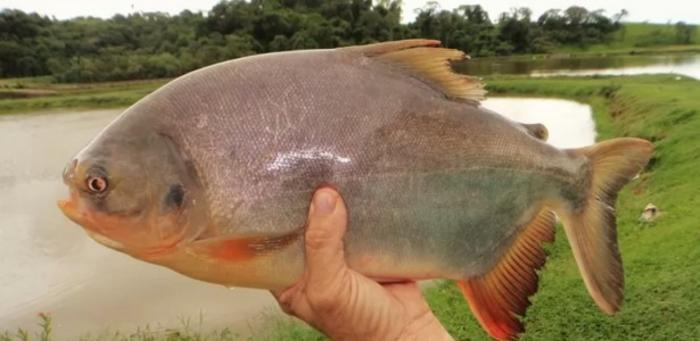
Brazilian researchers create biodegradable, collagen-based packaging film from tambatinga fish skin, offering plastic alternative and adding value to aquaculture waste streams.
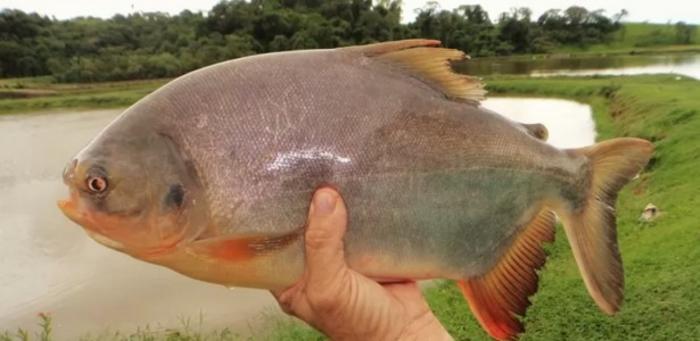
Tambatinga is the result of crossing tambaqui with pirapitinga. Credit: Fábio Rosa Sussel
Brazilian scientists have developed a biodegradable food packaging film made from the skin of the Amazonian tambatinga fish, offering a sustainable alternative to petroleum-based plastics and a new use for aquaculture waste.
The biofilm was created by researchers at the University of São Paulo (USP) and EMBRAPA Pecuária Sudeste in São Carlos, Brazil, with results published in the journal Foods. Supported by FAPESP’s Food Research Center (FoRC), the project aims to reduce environmental impacts linked to synthetic packaging accumulation.
Using collagen-rich fish skin typically discarded during processing, the team produced a transparent, flexible biopolymer film capable of partially replacing conventional plastic packaging.
The team chose tambatinga – a hybrid of tambaqui (Colossoma macropomum) and pirapitinga (Piaractus brachypomus) – for its rapid growth and high amino acid content, which improve gelatin functionality and film structure.
Strong performance but moisture limits remain
Food engineer Paulo José do Amaral Sobral, professor in the Department of Food Engineering at USP’s Pirassununga campus:
We’ve been working for over 25 years on the development of films based on biopolymers, such as proteins and polysaccharides, with the aim of applying this material to food packaging and reducing the environmental impact, since there are many problems associated with the accumulation of synthetic packaging in nature.”
To produce the material, researchers cleaned the fish skins and extracted gelatin using hot water and acetic acid before forming films with two grams of gelatin per 100 grams of solution. The resulting biofilm showed uniform structure, transparency and flexibility.
Performance testing demonstrated strong mechanical resistance, improved ultraviolet light blocking and lower water vapour permeability compared with other gelatin-based films reported in scientific literature. The findings highlight fish-processing by-products as a renewable, high-value raw material for sustainable biopolymer production.
However, moisture sensitivity currently limits applications. Sobral added:
For that reason, for now, they can only be used in dehydrated products, such as nuts and chestnuts.”
Researchers plan to further develop the material for wider food packaging use, as well as pharmaceutical and biomedical applications.

Мне “типа фейк” назвал кодовое слово в жабере, которое я написал нашему розовоникому магазину в лс на форуме. Вопрос в том как он его узнал? https://shacat.ru “Приезжаю к месту,вижу дом обхожу кооператив который мне нужен (ну я так думал)”На ближайшие 1.5 часа свободен, можно ни о чем не думать. Сачала хотел в центр поехать, чтобы сразу плсле адреса быстрей добраться до клада, потом трезво все взвесил,т спокойно поехал домой. Вот получил вчера 2 -й заказ…..отсылают быстро, качество отличное, плюс девайсы в которые всё ныколось в виде приятного бонуса…