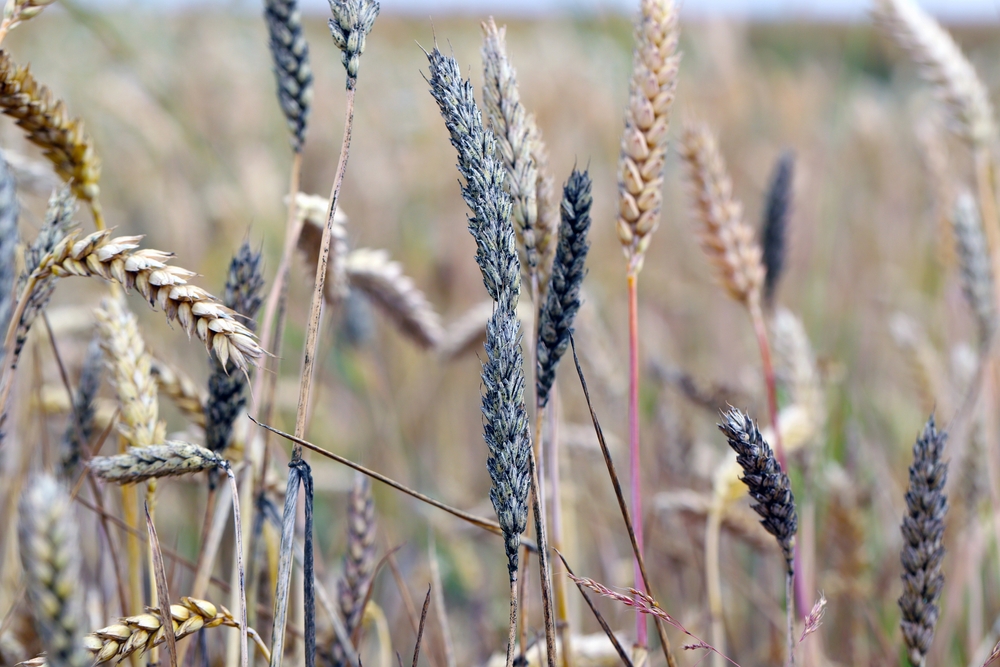
Amid the countless prominent effects of climate change lies a growing problem that’s been sidelined and misunderstood for too long. Professor Chris Elliott reveals why we must collectively sharpen up our approach to tackling mycotoxins in our food.
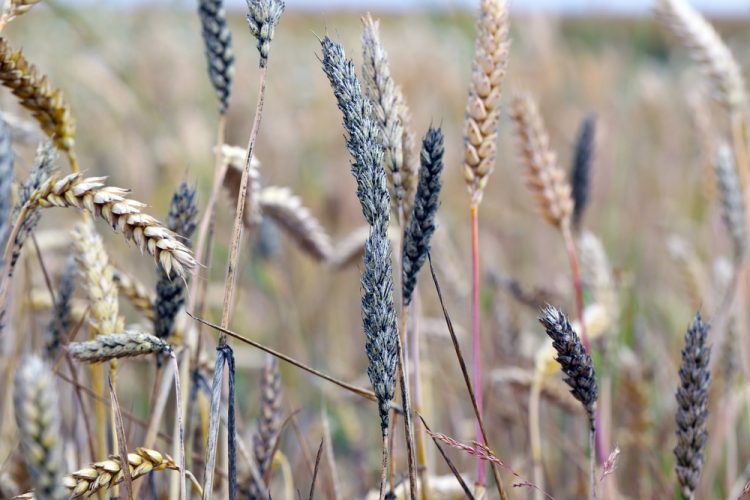
There are few hazards in the global food system that are as persistent and as poorly understood by consumers, businesses, food safety and public health agencies as mycotoxins.
If we are serious about protecting food security in an increasingly unstable world, mycotoxins must move from the margins of food safety discussions to the centre of strategic policy thinking.”
Only very rarely do they grab headlines and this is only when they have caused dramatic food safety incidents. Yet their impact on global food security, animal health, public health and trade is profound. Furthermore, there is a growing body of evidence that shows the severity of their impacts is increasing in scale.
The recently published DSM-Firmenich World Mycotoxin Survey 2025 analysed over 141,000 samples from 95 countries and provides one of the most comprehensive global snapshots of mycotoxin contamination ever produced. Its findings should concern regulators, industry leaders and policy makers alike the world over.
A truly global problem
The survey shows that 83 percent of all samples tested globally contained at least one mycotoxin above the recommended risk threshold, with co-contamination the norm rather than the exception. This data builds on the groundbreaking study led by Professor Rudi Krska – the first to expose the true scale of the issue. The new study shows that in many regions, over half of all samples contained multiple mycotoxins. This poses a fundamental challenge around how risk assessments should be conducted going forwards, as considering risks in terms of single mycotoxins is not fit for purpose. Toxicological effects are not simply additive. Synergistic interactions between toxins can amplify impacts on gut health, immune function and fertility. Yet most regulatory frameworks still assess mycotoxins largely on a single-compound basis – a model increasingly disconnected from biological realities.
The consequences of chronic mycotoxin exposure in livestock systems are well documented: reduced feed intake, impaired nutrient absorption, immunosuppression, reproductive disorders and increased disease susceptibility. The 2025 survey provides stark evidence of these risks across poultry, swine, ruminant and aquaculture feeds.
There is also a less discussed, but highly significant downstream effect. Animals compromised by mycotoxins are more prone to infection, often leading to increased veterinary interventions and antimicrobial use. In this way, mycotoxins may be an unrecognised driver of antimicrobial resistance, linking food safety directly to one of the most pressing global public health challenges.
I firmly believe that only using the power of AI can such assessments be undertaken with the required degree of scientific rigour. The data needed for such assessments can be provided by amazing advances in analytical chemistry, which can quantify many hundreds of mycotoxins simultaneously
Regions traditionally considered ‘high risk’, such as Sub-Saharan Africa, South-East Asia and parts of South America, continue to show extreme prevalence of aflatoxins, fumonisins and trichothecenes. However, what is particularly striking in the 2025 data is the consistently high risk observed across Europe, North America and Central Asia, driven primarily by Fusarium toxins such as deoxynivalenol (DON), zearalenone (ZEN) and fumonisins. Clearly mycotoxins should no longer be viewed as problems confined to the global south or poorly controlled supply chains; they are also substantial problems within modern, highly regulated food and feed systems.
Climate change: the unmissable issue hiding in plain sight
If one factor stands out as a powerful accelerant of mycotoxin risk, it is climate change.
Clearly mycotoxins should no longer be viewed as problems confined to the global south or poorly controlled supply chains; they are also substantial problems within modern, highly regulated food and feed systems.”
Altered rainfall patterns, prolonged droughts, flooding events and temperature volatility are creating ideal conditions for fungal growth and toxin production. The survey data show year-on-year increases in prevalence for several key toxins across multiple regions, particularly in maize, wheat and silage. These are commodities that underpin both human food and animal feed systems. For example, fumonisins were detected in up to 97 percent of samples in some regions, while DON and ZEN showed widespread prevalence across Europe and North America. As the growing number of climate models predict further instability, it is difficult to avoid the conclusion that mycotoxin pressures will further intensify in terms of prevalence and impacts.
Human health and trade: the hidden costs
While acute mycotoxicoses (disease outbreaks) are rare in developed economies, chronic low-level exposure remains a concern, particularly for vulnerable populations. Aflatoxin B1, for example, is a known carcinogen, strongly associated with liver cancer, while ochratoxin A has been linked to kidney damage and immunotoxicity. From a trade perspective, mycotoxins represent a significant non-tariff barrier. Shipments rejected due to contamination have major economic consequences, particularly for exporting countries in Africa, Asia and Latin America. As importing regions tighten standards and expand testing for emerging and masked toxins, the risk of market exclusion grows.
From reaction to prevention
Data generated from the multiple testing programmes must be translated into actionable intelligence: predictive risk models, climate-linked early warning systems and smarter, risk-based sampling strategies. This is where digitalisation, AI-driven analytics and international data-sharing frameworks will undoubtedly play a transformative role. Historically, mycotoxin management has been reactive, ie, test–reject–mitigate. That approach is no longer sufficient. Instead, a whole-system strategy is required, spanning pre-harvest agronomy, post-harvest storage, logistics, processing and feed formulation. This includes initiatives such as climate-adapted crop management and increasing use of fungal-resistant crop varieties; improved storage and moisture control and broader surveillance incorporating emerging and masked toxins. Risk-based regulatory frameworks that reflect co-exposure and increased international collaborations must also be developed, particularly within climate-vulnerable regions.
Mycotoxins may be invisible to the naked eye, but their impact is anything but. The DSM-Firmenich World Mycotoxin Survey 2025 provides compelling evidence that we are facing a systemic, climate-amplified food safety challenge that cuts across health, trade, sustainability and resilience. If we are serious about protecting food security in an increasingly unstable world, mycotoxins must move from the margins of food safety discussions to the centre of strategic policy thinking. Ignoring them will not make them go away – it will only make the consequences more severe.
A call for greater action
For the food industry: mycotoxins must now be treated as a strategic business risk, not a compliance checklist. Climate volatility, global sourcing and consumer scrutiny mean that historical data and end-point testing are no longer enough. Companies that invest in predictive risk assessment, deeper analytical insight and closer engagement with suppliers will protect both their brands and market access.
For the feed sector, the message is equally stark: mycotoxins sit at the heart of animal health, productivity and sustainability. Chronic exposure erodes performance, drives disease pressure and quietly increases reliance on veterinary interventions. Managing this risk requires moving beyond single-toxin thinking towards routine multi-mycotoxin surveillance and smarter mitigation strategies.
For regulators, the evidence now demands a step-change in approach. Current frameworks, largely built around individual toxins and static thresholds, no longer reflect real-world exposure or climate reality. There is now the opportunity to modernise regulation embracing better data, climate-informed surveillance and risk-based control while working collaboratively with industry to protect public health, support fair trade and future-proof the food system.
Related topics
Contaminants, Data & Automation, Environment, Food Safety, Food Security, Health & Nutrition, Mycotoxins, Quality analysis & quality control (QA/QC), Rapid Detection, Regulation & Legislation, Supply chain, Sustainability, Trade & Economy, World Food


porn indian
купить кокаин, мефедрон, бошки, марихуану 1к10 будет вполне нормально. делал ещё с первой партии микс на нём.Плохого и не слышал! Ребятке во всех дела достойно поступают! я не знаю чего тебе делать!