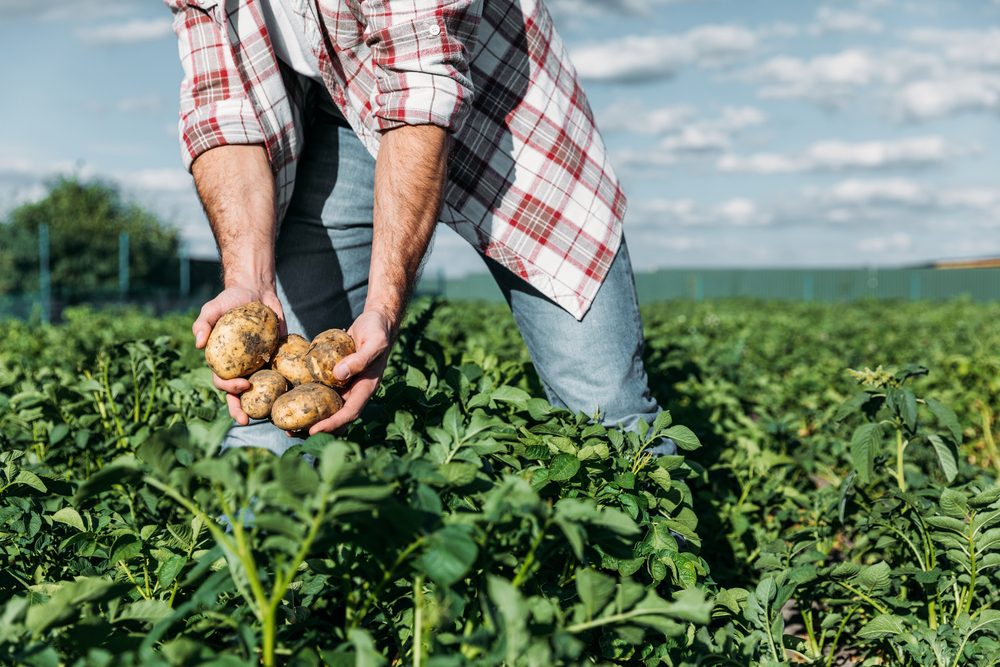
McCain is opening a regenerative farming research site in North Yorkshire, helping British growers boost resilience amid climate, soil and policy pressures.
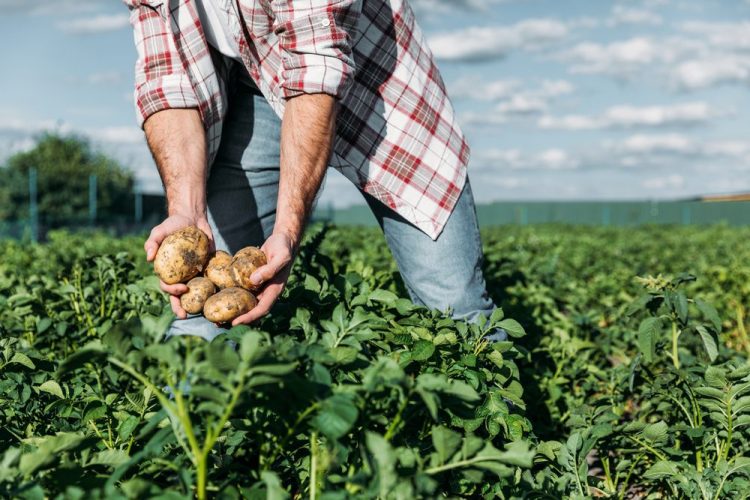
McCain Foods, the UK’s largest manufacturer of prepared potato products, has announced plans to launch a regenerative Farm of the Future in North Yorkshire, aimed at strengthening the long-term resilience of British agriculture and food supply chains.
The 202-hectare commercial-scale farm, developed in partnership with the University of Leeds, will trial regenerative practices in real farming conditions as growers face mounting pressure from unpredictable weather, declining soil health and policy uncertainty.
Max Koeune, President and CEO at McCain Foods, said the project will help scale practical solutions across its supply chain:
McCain Farm of the Future UK marks an important step in how we are scaling regenerative agriculture across our global Farms of the Future.
Each site helps us test real solutions with farmers, understand what works, and share that knowledge across our network.”
A flagship site for regenerative innovation
McCain describes the UK farm as its most advanced Farm of the Future to date, adopting techniques such as controlled traffic farming, year-round soil cover and biodiversity building.
It will also be the first Farm of the Future location to pilot a circular nutrient system, developed with the University of Leeds National Pig Centre. The system will use pig manure to enrich soils, cut waste and demonstrate how mixed farming systems can improve soil health and biodiversity while helping to lower greenhouse gas emissions.
The site will also explore autonomous vehicles and alternative fuels for farm equipment, with results published annually to support knowledge-sharing across McCain’s global network of 4,400 farmers. Potato production is expected to begin in 2026.
The Yorkshire farm becomes McCain’s third Farm of the Future globally, following established farms in Canada and South Africa, completing the company’s commitment to launch three such farms by 2025. The announcement aligns with McCain’s newly released 2025 Global Sustainability Report, highlighting progress towards its long-term environmental goals.
Supporting farmers through transition
McCain says the farm is designed to accelerate adoption of regenerative approaches at a time when confidence in the sector is under strain.
Its Farmdex research found that while many British farmers are concerned about the future, 77 percent agree sustainable practices are essential, and those already investing in them report greater resilience.
James Young, Vice President of Agriculture at McCain GB&I, said farmers urgently need workable new models:
Farming is at the heart of Britain’s food system, and farmers face growing challenges that demand new solutions.”
This farm will show that regenerative farming works in practice and aims to provide a blueprint for others, helping secure the future of farming for generations to come.”
The University of Leeds will provide independent validation of outcomes across soil health, biodiversity and greenhouse gas emissions.
Professor Nick Plant, Pro-Vice-Chancellor: Research and Innovation at the University of Leeds, added:
The University of Leeds is committed to helping address global challenges including food security and the climate crisis.
Our partnership with McCain at their Farm of the Future in the UK is a clear example of our joint ambition to promote farming practices which minimise environmental impact.
Establishing this 20-year agreement will enable us to further develop research expertise in soil health and land productivity that can benefit farming approaches worldwide.”
McCain says it has already made strong progress in Britain, with 86 percent of its potato acreage at “Engaged” or higher within its Regenerative Agriculture Framework.
Since 2017, McCain GB has delivered a 25 percent reduction in Scope 1 and 2 emissions and a 19 percent reduction in water intensity, demonstrating tangible progress towards a more resilient and sustainable food system.
Related topics
Environment, Food Security, Processing, Recruitment & workforce, Regenerative Agriculture, Research & development, retail, Supply chain, Sustainability, Trade & Economy, World Food


супер !!! купить кокаин, мефедрон, бошки, марихуану бобик здох ….подвела доставка, заказал 2-го получил 16-го