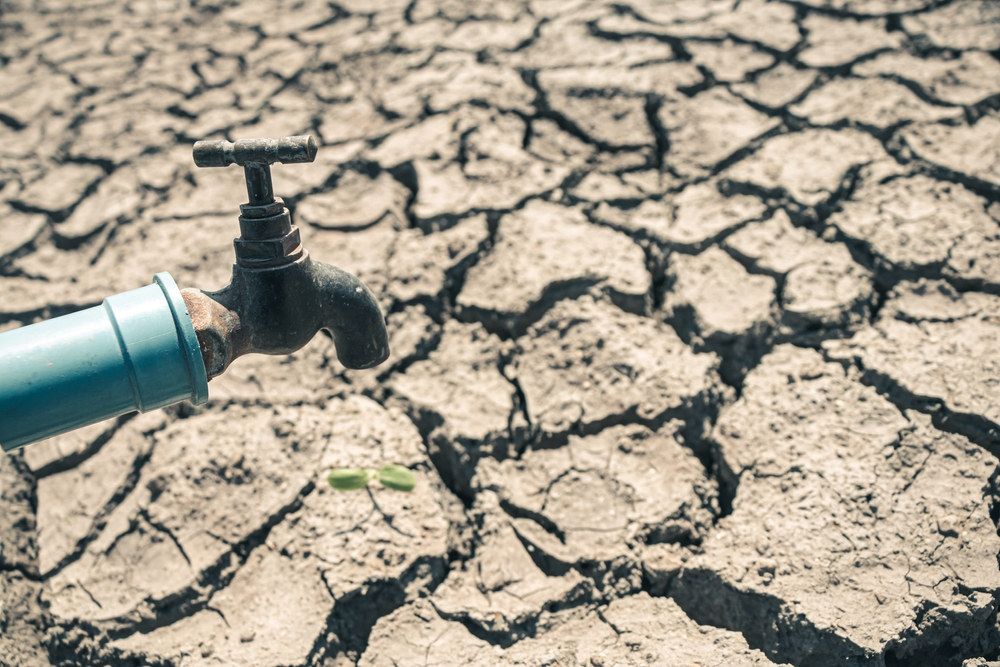
UN report warns irreversible water losses threaten global food systems, urging governments to reset policy before shortages destabilise agriculture and markets.
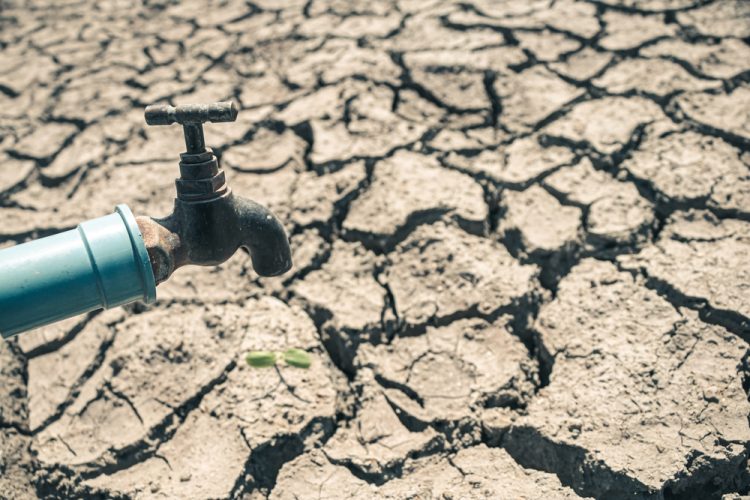
The world has entered an “era of global water bankruptcy”, according to a major new United Nations (UN) report warning that food systems, farming communities and global markets face escalating risk from irreversible water loss.
Published today by UN University scientists, the flagship report says many river basins and aquifers can no longer recover to historic levels after decades of overuse, pollution and climate pressure.
The report, Global Water Bankruptcy: Living Beyond Our Hydrological Means in the Post-Crisis Era, argues that terms such as “water stress” and “water crisis” now understate the severity of conditions in many regions that underpin global food production.
Kaveh Madani, Director of the UN University’s Institute for Water, Environment and Health stated:
This report tells an uncomfortable truth: many regions are living beyond their hydrological means, and many critical water systems are already bankrupt.”
Issued ahead of a high-level UN meeting in Dakar on 26 to 27 January to prepare the 2026 UN Water Conference, the report says water overuse has already pushed many systems beyond recovery, with knock-on effects for agriculture, trade and food security worldwide.
Water systems ‘in the red’
Using a financial metaphor, the authors argue that societies have not only overspent their annual renewable water “income” from rainfall, rivers and snowpack, but have also depleted long-term “savings” held in aquifers, glaciers and wetlands.
The consequences include compacted aquifers, sinking cities and farmland, vanished lakes and wetlands, and permanent biodiversity loss.
Based on a peer-reviewed paper in Water Resources Management, the report formally defines water bankruptcy as persistent over-withdrawal from surface and groundwater combined with irreversible or prohibitively costly loss of water-related natural capital.
By contrast, the authors say “water stress” can still be reversible, while a “water crisis” implies a short-term shock that systems can recover from.
Madani said:
These systems are interconnected through trade, migration, climate feedbacks, and geopolitical dependencies, so the global risk landscape is now fundamentally altered.”
Food and farming on the frontline
The report highlights agriculture as both a major driver of water bankruptcy and one of its biggest victims.
Globally, more than 40 percent of irrigation water is now pumped from aquifers that are steadily declining, while 70 percent of major aquifers show long-term depletion. More than 50 percent of global domestic water supplies also come from groundwater.
Madani explained:
Millions of farmers are trying to grow more food from shrinking, polluted, or disappearing water sources. Without rapid transitions toward water-smart agriculture, water bankruptcy will spread rapidly.”
For food professionals, the implications extend far beyond farm gates. Agriculture accounts for most freshwater use, and global food systems are tightly linked through trade and prices.
He added:
When water scarcity undermines farming in one region, the effects ripple through global markets, political stability, and food security elsewhere. This makes water bankruptcy not a series of isolated local crises, but a shared global risk.”
The report identifies several regions where water bankruptcy risks are especially acute. In the Middle East and North Africa, high water stress combines with climate vulnerability, low agricultural productivity, energy-intensive desalination and political complexity. In parts of South Asia, groundwater-dependent farming and rapid urbanisation have driven chronic falls in water tables and land subsidence.
The global picture
Drawing on global datasets, the report paints a bleak statistical picture, much of it driven by human activity:
- 50 percent of large lakes worldwide have lost water since the early 1990s
- 410 million hectares of wetlands have been lost in five decades
- More than 30 percent of global glacier mass has disappeared since 1970
The human consequences are equally severe. Around 75 percent of humanity lives in countries classified as water-insecure, while four billion people face severe water scarcity for at least one month each year.
The report estimates the annual global cost of drought at 307 billion US dollars, with lost wetland ecosystem services valued at 5.1 trillion US dollars each year.
Beyond crisis management
A key message for policymakers is that water bankruptcy is not about how wet or dry a place appears in a given year. A region can be flooded one year and still be water bankrupt if long-term withdrawals exceed replenishment.
The authors argue that current global water policy, focused largely on drinking water, sanitation and incremental efficiency gains, is no longer sufficient in many regions.
Instead, they call for a reset that formally recognises water bankruptcy, elevates water in climate and biodiversity negotiations, embeds advanced monitoring, and uses water as a catalyst for international cooperation.
In practical terms, this means preventing further irreversible damage, rebalancing water rights and expectations, supporting just transitions for affected communities, and transforming water-intensive sectors such as agriculture through crop shifts and irrigation reform.
A justice issue
The report stresses that water bankruptcy is also a social and political issue, with impacts falling disproportionately on smallholder farmers, Indigenous Peoples, low-income urban residents, women and young people.
Tshilidzi Marwala, UN Under-Secretary-General and Director of the UN University said:
Water bankruptcy is becoming a driver of fragility, displacement, and conflict. Managing it fairly – ensuring that vulnerable communities are protected and that unavoidable losses are shared equitably – is now central to maintaining peace, stability, and social cohesion.”
Despite its clear warnings, the authors insist the report is not a counsel of despair.
Madani concluded:
Declaring bankruptcy is not about giving up – it is about starting fresh. By acknowledging the reality of water bankruptcy, we can finally make the hard choices that will protect people, economies, and ecosystems. The longer we delay, the deeper the deficit grows.”



школа seo школа seo .
учиться seo kursy-seo-4.ru .
seo онлайн seo онлайн .