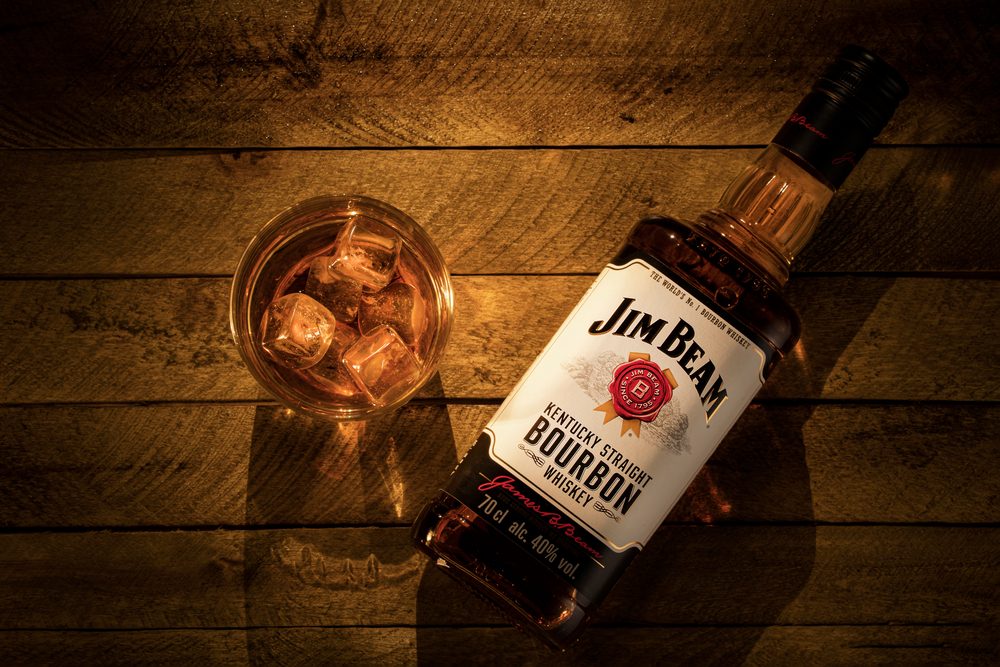
Bourbon giant pauses output at flagship site as tariffs, oversupply and falling alcohol demand pressure US whiskey industry.

Jim Beam is shutting down bourbon production at its main Kentucky distillery for the whole of 2026, as the US whiskey sector grapples with trade uncertainty, excess inventory and declining alcohol consumption.
The bourbon maker will close its Clermont distillery next year to take the “opportunity to invest in site enhancements”, pausing production throughout 2026.
In a statement, Jim Beam said:
We are always assessing production levels to best meet consumer demand and recently met with our team to discuss our volumes for 2026.”
The company added it is assessing how to deploy its workforce during the shutdown and is in discussions with its workers’ union.
The Clermont distillery is Jim Beam’s primary production site, but the business said its other Kentucky operations, including a second distillery, bottling facilities and warehouse plants, will remain open next year. Its Kentucky visitor centre will also continue to operate.
Jim Beam is owned by Suntory Global Spirits, which employs more than 6,000 people worldwide, including over 1,000 across its Kentucky sites. The Japanese drinks group acquired Jim Beam in 2014 for $16bn and also owns brands including Haku Vodka, Sipsmith Gin, Orangina and Lucozade.
Navigating inventory pressures and retaliatory tariffs
The production pause comes as inventory pressures intensify across the bourbon industry. In October, the Kentucky Distillers’ Association said bourbon stocks in warehouses across the state had reached a record high of more than 16m barrels. According to the association, state barrel taxes alone have cost distillers a “crushing” $75m (£56m) this year. The scale of oversupply and rising tax costs has pushed distillers to scale back production and investment plans across the state.
Trade tensions have added further strain on US whiskey producers. In March, Canadian officials banned American spirits from stores, a restriction that remains in place in some provinces, while the European Union warned it could raise tariffs on American whiskey to 50 percent in response to US steel and aluminium duties.
Pressure intensified in April when US president Donald Trump announced sweeping so-called “Liberation Day” tariffs on most countries. In August, the EU announced a six-month suspension of planned retaliatory tariffs on US imports, including distilled spirits, wine and used barrels.
Kentucky Distillers’ Association President Eric Gregory said in October that trade uncertainty was complicating long-term planning for bourbon producers.
Much of the expansion over the last decade has been geared towards global growth. Long-term planning for a product that won’t be ready for years is already tough enough. We need the certainty of tariff-free trade for America’s only native spirit to flourish.”



электрические карнизы для штор в москве kupite-elektrokarniz.ru .
рулонные шторы на створку рулонные шторы на створку .
success-focused plan – Provides practical guidance for making measurable progress.
спам заявками на почту
Email Bombing – email flood or email hoax (DOS attack) or cluster email bombing, what are they actually doing?
A huge number of emails are sent to e-mail. This usually means that the @Flood_email_bot specifically targets the victim’s mailbox associated with your email.
These emails are intended to make fun of friends or distract the victim from any security messages or other emails.
I am glad to present you a mail flood bot with a convenient menu and flexible settings!
The cost of the service is $ 1 = 1000 letters.
You specify the time of the flood and the number of letters yourself, or choose the “FAST FLOOD” function
During the flood, a sufficient number of letters arrive so that the owner would miss an important letter!
The bot will flood more than you ordered. On average, 30% more than ordered.
Flood email, Floods Email, Email flooding, gmail flood, email bomber, flood hotmail, flood online,email flooding, email flood bot, email flooded with spam, email flooding service, email flooded with subscriptions, email flooder bot, email bomber 2023, email bomber 2024, email spam bot online, email spammer bot free, spam bot, бот по флуду почт, сервис по флуду почт, услуги по флуду, флуд услуги.
@Flood_email_bot – Лучший емаил бомбер на рынке!