Ingredient supplier ofi exceeds climate and living income milestones, reinforcing long-term cocoa supply chain resilience for food manufacturers.
The global ingredients supplier Olam Food Ingredients (ofi) has surpassed key climate and farmer income milestones in its cocoa supply chain, strengthening efforts to secure the future of cocoa supply chains for food and beverage manufacturers.
ofi said its latest Cocoa Compass Impact Report 2024 shows it has achieved a 12 percent reduction in cocoa greenhouse gas (GHG) Natural Capital Cost per tonne of output against its 2018 baseline. This exceeds its 2024 milestone target of a 10 percent reduction.
The progress comes amid growing concern across the cocoa sector, as climate change, crop disease and market volatility threaten future supply and force manufacturers to reassess sourcing and formulations.
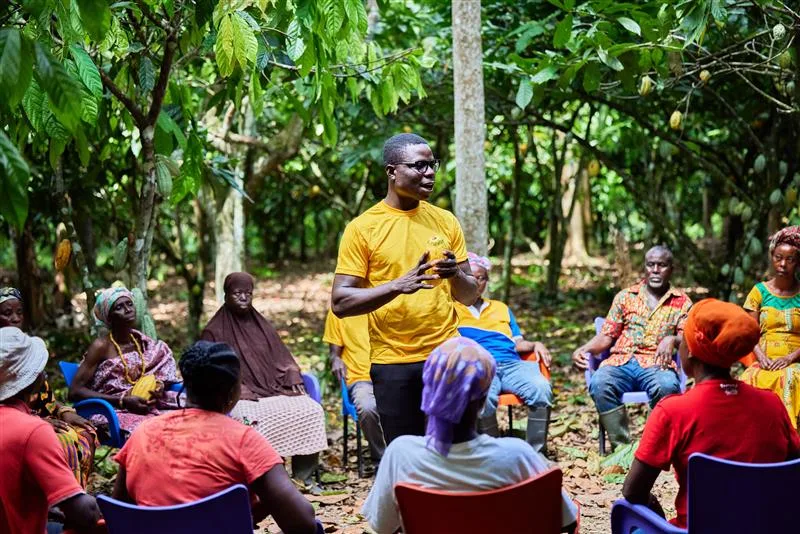
Alongside emissions reductions, ofi revealed it has already reached its 2030 cocoa living income target, with 155,000 farmers now earning a living income. This represents 45 percent of farmers participating in its global cocoa sustainability programmes and significantly exceeds its 2024 milestone of 60,000 farmers.
Andrew Brooks, Global Head of Cocoa Sustainability at ofi, said:
We’re continuing to invest in farm-level engagement and ingredient innovation by leveraging the scale of our integrated business model. This enables us to de-risk supply chains, and help deliver more sustainable, high-quality cocoa ingredients and tailored food solutions to our customers that meet evolving consumer demands.”
The Cocoa Compass report marks the halfway point between ofi’s 2018 sustainability baseline and its 2030 targets. The company said its progress supports its ambition to be a long-term partner for manufacturers seeking resilient, responsible cocoa supply.
Brooks added:
Our latest impact in our cocoa supply chain is supporting our ambition of being the preferred partner for positive change, in line with our overarching sustainability strategy- Choices for Change.
As we continue towards 2030, our focus will be on maintaining this progress and enable more sustainable outcomes for cocoa production against the unpredictability of fluctuating markets and climate changes.”
Other achievements outlined in the 2024 report include the cumulative distribution of 9.8 million trees through agroforestry programmes, annual training of 257,000 farmers in Good Agricultural Practices, and livelihood support provided to 320,000 cocoa farmers. ofi also reported six active landscape partnerships and education support reaching 40,000 children during the year.
Collaboration critical to safeguarding future supply
ofi acknowledged that farmer incomes remain heavily influenced by external factors such as weather and global cocoa prices. Sharp price increases in 2024 contributed to more farmers reaching a living income, while future price declines could reverse that progress. As a result, the company uses living income as a contextual indicator to guide long-term interventions rather than a standalone measure of success.
The company said its Natural Capital progress has been driven by reductions in land-use change emissions and increased carbon sequestration from cocoa and forest trees planted through agroforestry initiatives.
Looking ahead, Brooks warned that collaboration across the cocoa value chain will be critical to safeguarding future supply for confectionery and chocolate manufacturers.
The industry, including governments and NGOs, need to rally together to rethink how we’re tackling challenges like crop disease, deforestation, particularly in West Africa.
With cocoa crop reductions expected, and demand destruction already having an impact on product formulations, we need to find collective solution that is good for cocoa farmers, good for food and beverage processors and manufacturers, and good for consumers as well.”