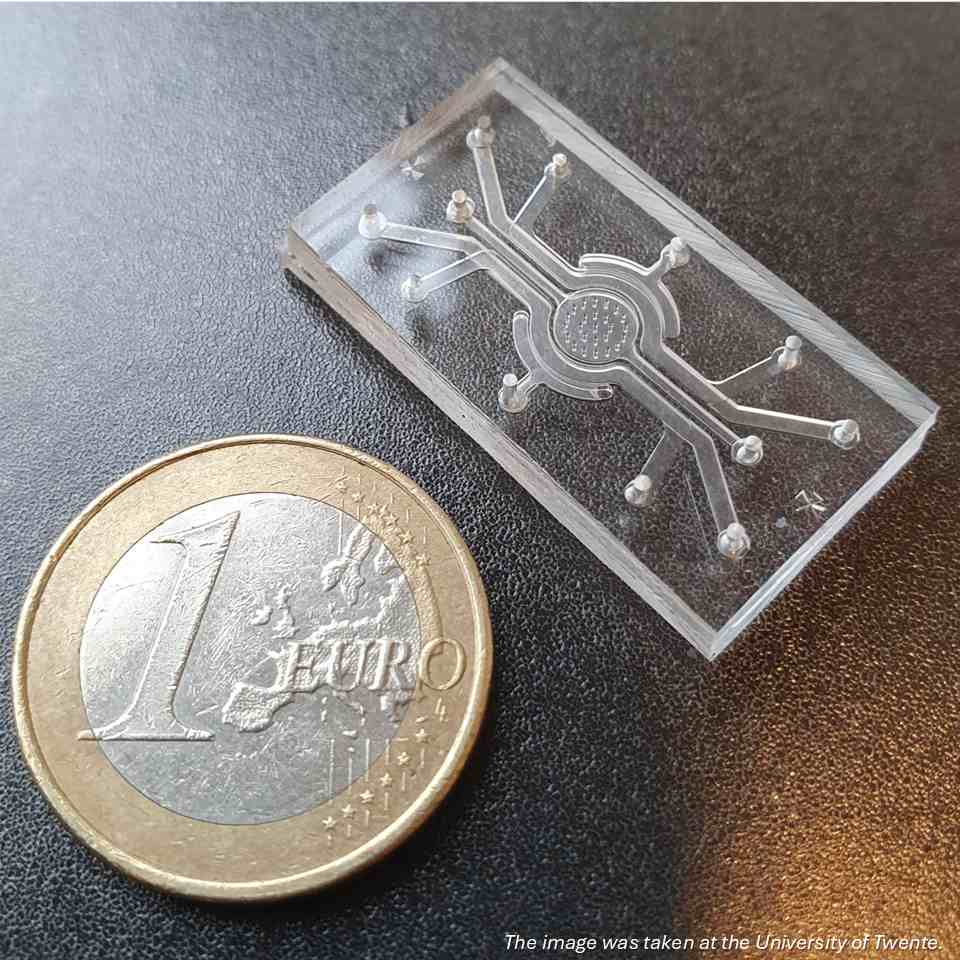
NIZO and the University of Twente have launched a Gut–Brain Axis on Chip that tracks how nutrients affect brain function, offering food innovators an animal-free testing solution.
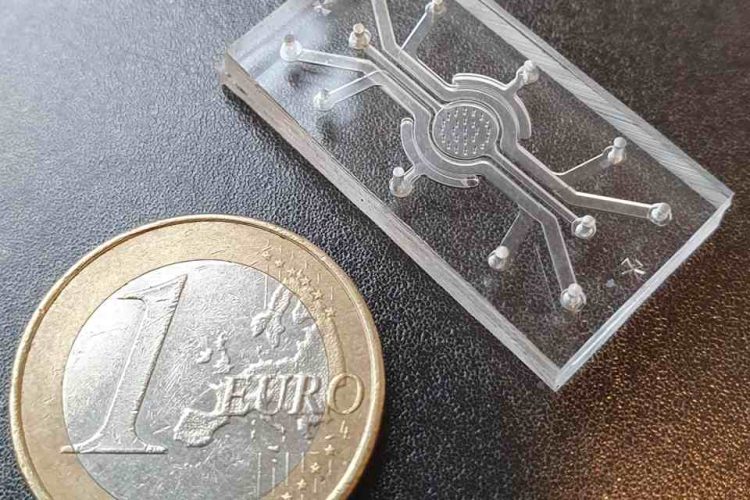
The Gut-Brain Axis on Chip. Credit: University of Twente
Dutch food research organization NIZO and the University of Twente have entered a strategic partnership to commercialise the Gut–Brain Axis on Chip, a laboratory device that replicates communication between the human gut and brain.
NIZO will showcase the technology at Fi Europe 2025 in Paris next week, giving food and nutrition companies a way to assess how ingredients affect brain function without animal or human testing.
The system grows miniature human intestinal and brain tissues from stem cells within a microfluidic chip. It recreates biological pathways including the vagus nerve, which allows the gut to send sensory and biochemical signals to the brain in response to food.
Nikolaas Vles, CEO of NIZO, said:
The Gut-Brain Axis on Chip marks a turning point in how we understand the relationship between nutrition and brain health. For the first time, we can physically observe how food-derived components influence cognitive development and aging.”
Addressing a major evidence gap in nutrition science
Research increasingly links nutrition to brain health across the lifespan, from early development to cognitive ageing. Much of this influence is thought to be mediated through the gut microbiota, which interacts with food components and communicates with the brain through biochemical and neurological pathways. However, the mechanisms behind these effects remain unclear because nutrients change significantly during digestion, shaped by the food matrix, processing conditions and microbial activity.
The Gut–Brain Axis on Chip is intended to help close this gap. The device enables researchers to track the journey of food ingredients from ingestion to their effects on the brain, measuring cognitive markers such as myelination, neurogenesis and synaptic pruning.
Its microfluidic set-up precisely controls the tissues’ environment, while techniques such as mRNA profiling and protein analysis provide measurable evidence of how nutrients influence neural development, memory and cognitive function.
Integrated pipeline for ingredient evaluation
NIZO has integrated the University of Twente’s Gut–Brain Axis on Chip into its in vitro platforms, combining the technology with its digestion models, microbiome expertise and analytical capabilities to create a unified pipeline that tracks food components from the gut to the brain. The system allows researchers to assess how nutrient and microbiota-derived compounds influence key brain processes.
NIZO said the combined approach improves early prediction of how foods may affect brain health. Early validation studies have already shown that the chip can detect meaningful biological responses to test ingredients, giving companies a dependable early screening tool before progressing to human or animal studies.
Dr Kerensa Broersen, professor at the University of Twente and senior scientist of health and digestion at NIZO, added:
Being able to map the route of food to the brain represents five years of exceptional teamwork between our scientists and NIZO’s experts. Together, we have built a scientifically rigorous, animal-free platform that makes the gut–brain connection measurable and actionable.”
The partners say the technology provides a foundation for next-generation developments in functional foods, nutritional therapies and pharmaceutical applications. Potential areas include targeted modulation of cognition, brain ageing and early-life brain development.
Related topics
Equipment, Health & Nutrition, Ingredients, Lab techniques, New product development (NPD), Nutraceuticals, Product Development, Research & development, Technology & Innovation, The consumer, Trade & Economy, World Food