
Food industry shockwaves generated by the Xinjiang-region tomato exposé last year have been significant; but Professor Chris Elliott has wider concerns that no one is talking about…
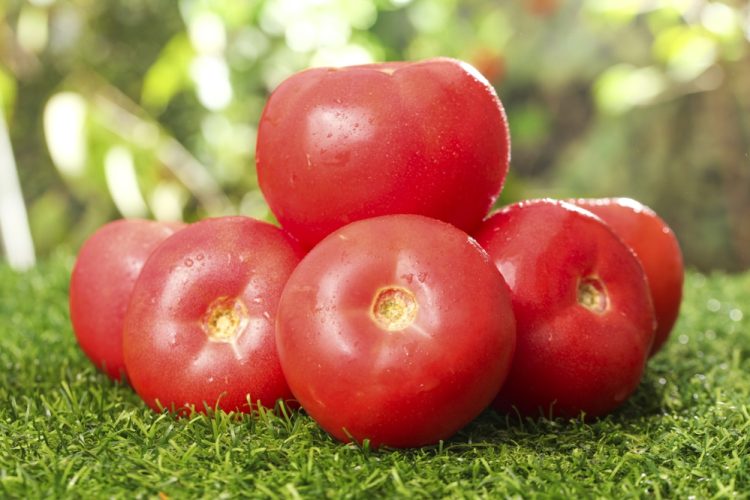
Xinjiang tomatoes: a once booming crop now at the centre of a global supply chain scandal.
Few food-industry stories in recent years have generated as much heat or as many geopolitical ripples as the BBC’s investigation into tomatoes from China’s Xinjiang region. BBC Panorama alleged late last year, followed by further BBC coverage, that some Uyghur prisoners and detainees in the Chinese province of Xinjiang may have been involved in the growing and harvesting of tomatoes that later entered UK and EU supply chains. It is fair to say that the global impact of this story has been enormous. Some UK retailers rapidly reviewed their sourcing policies, Italian processors re-evaluated their blending practices and an entire segment of China’s agricultural economy has been put in jeopardy.
This rise and fall is extreme by any standard, but in such a short space of time it stands out to me more than any other collapse I’ve observed.”
Yet as so often happens, I believe the headlines tell only part of the story. After reviewing the recent detailed Financial Times (FT) analysis of China’s collapsing tomato-paste exports to Italy, alongside the BBC reporting, I am left with a sense that much of the public debate has missed some important points. The situation is more complex than the narrative presented and the consequences of this collapse in trade may create new food-fraud risks across Europe that have not been fully appreciated.
The FT article shows how China’s western region of Xinjiang had, over the last decade, become a global powerhouse for tomato paste production. Having increased its tomato processing from 4.8 million tonnes in 2021 to around 11 million tonnes in 2024, the region saw production fall this year to an expected 3.7 million tonnes as demand from Europe all but collapsed. This rise and fall is extreme by any standard, but in such a short space of time it stands out to me more than any other collapse I’ve observed.
Much of the demand that fuelled China’s rapid tomato paste expansion came from Europe – particularly Italy, which is the world’s leading exporter of finished tomato ingredients such as passata, sauces and canned tomatoes. As the FT noted, based on the Panorama findings several Italian processors were believed to have been blending Chinese paste into their products labelled as “100% Italian”. This practice had been previously exposed during a Carabinieri raid back in 2021.
It was in this already sensitive context that the BBC allegations appeared. The programme suggested that some of the tomatoes grown in Xinjiang may have been harvested using Uyghur forced labour. China strongly denied these claims, calling them entirely fabricated, yet the damage to the region’s reputation in UK and European markets has been severe. Retailers, quite rightfully, became very wary of association with any potential scandal and some have taken a firm line with suppliers, insisting on assurances that products of Chinese origin are not entering their ingredient streams.
The impact on trade has also been dramatic. Chinese processed tomato exports to Italy fell from over $75 million to under $13 million in the first nine months of 2025, a collapse of some 76 percent. Across the EU, imports from China are down by more than two-thirds. According to industry estimates cited in the FT, China is now sitting on between 600,000 and 700,000 tonnes of unsold tomato paste. This equates to roughly six months’ worth of exports with few viable markets open to absorb this spare capacity. This is an unprecedented situation: a tomato-paste lake with nowhere to flow.
Amid this trade shock lies a predicament that has received surprisingly little coverage. The livelihoods of Xinjiang’s tomato farmers and their families, most of whom are not connected to alleged labour-coercion systems, are now in a perilous situation. If the BBC allegations are accurate, they absolutely must be addressed and remedied, of this there is no doubt. But what if, as I suspect, the picture is more complex? We must therefore consider that the wholesale collapse of demand could severely harm large-scale rural agricultural communities in western China who depend on seasonal work and tomato cultivation for their income. This is a side of the debate that I have not heard being discussed.
Meanwhile, Europe now faces a very practical question: where will the tomato paste actually come from to replace the volume that once flowed from Xinjiang? European producers in Italy, Spain, Portugal and Greece cannot simply expand production overnight – far from it. Their agricultural capacity is largely fixed by climate, land availability and water constraints. Other countries, such as Turkey or Ukraine, could theoretically increase exports, but both face their own geopolitical and logistical pressures. North African suppliers may help fill some of the gap, but even combined, these alternative sources are unlikely to match the sudden deficit left by China’s blacklisting. Europe’s food manufacturers, who rely heavily on tomato paste for pizzas, sauces, ready meals and soups will still need vast quantities of ingredient-grade tomato products. When a major supplier disappears almost overnight, something has to fill the vacuum.
When legitimate supply shrinks sharply while demand and prices remain high, the incentives for fraudulent behaviour multiply…”
This ignites my concerns about food fraud. Fraud in tomato paste is not new. The sector has long been a target for adulteration because paste is so easily diluted, blended or misrepresented. Historically, the most common fraudulent practices include dilution with lower-quality paste, addition of starches or sugars to mimic thickness, undeclared blending of material from multiple origins, mislabelling of provenance – such as “100% Italian” – and the use of potentially toxic colourants such as Sudan Red dyes to mask inferior raw materials and the presence of bulking agents.
When legitimate supply shrinks sharply while demand and prices remain high, the incentives for fraudulent behaviour multiply; this is one of the well-recognised drivers of food fraud. We have seen this type of pattern emerge before in commodities such as olive oil and honey. Whenever supply chains become stressed, bad actors happily step in.
With between half a million and three-quarters of a million tonnes of Chinese tomato paste now stranded and Europe needing to secure new supplies quickly, the conditions for a surge in fraud are very real. Paste imported through secondary markets or repacked via third countries could find its way back into European supply chains under different labels. Lower-quality paste might be blended into higher-value products. Non-tomato ingredients could be added to extend volumes. In summary, the risk of adulteration is high; thus regulators and the food industry should be preparing accordingly.
Without doubt, the BBC Panorama investigation raised some important questions, but did it really have a sufficiently robust body of evidence to support its claims? I offered to talk with the BBC journalists about some of my concerns regarding their evidence base prior to it being screened. The offer was not taken up.
While greater transparency and scrutiny of labour practices in global supply chains is essential, we must also consider the livelihoods of farmers in producing regions and the integrity of the food systems that depend on them. Europe now faces the dual challenge of maintaining an adequate supply of tomato paste while preventing a surge in food fraud as opportunistic actors seek to exploit market instability. This is a moment for reflection for many, and I would suggest the BBC includes itself in this process.


Если вы намерены планируете поездку в Калининград и планируете оценить особенной природой и архитектурой, обязательно посетите уединенные пляжи Калининградской области, а также погрузитесь с историей острова Канта и его концертами органной музыки. Для пеших прогулок по городу прекрасно подойдут пешие маршруты по Калининграду, где есть возможность обозреть самые привлекательные улицы и архитектуру старого города. Также рекомендуется побывать в калининградский зоопарк — узнайте часы работы и прайс билетов на официальном портале смотровая площадка калининград .
Для любителей моря необходимо знать, что сезон купания в Калининграде в основном приходится на июль и август, когда прогрев воды в Балтийском море бывает относительно благоприятной для купания. Когда вы решаете раздумываете о том, когда целесообразнее ехать в Калининград или как добраться из Калининграда в Зеленоградск на поезде или до Куршской косы, в интернет-пространстве реально подобрать точные маршруты и графики. А на закате возможно получить удовольствие от восхитительными видами со смотровых площадок и испробовать замечательные завтраки в каком-нибудь из кафе города.
Alright lottery fans! ketquaxsmn is where I go to find all the South lottery results. It’s a pretty handy site to bookmark.