Silence doesn’t just hide danger; it allows it to grow. In this powerful Author’s Note and behind-the-scenes interview, Dr Darin Detwiler reveals how Silent Enemies came to life, why its message matters now more than ever, and the bold shifts the food industry must make to prevent the next avoidable tragedy.
This Author’s Note is not a summary. It is not an epilogue.
It is a reckoning.
After four chapters of Silent Enemies, drawn from the deepest depths of submarines and the rawest edges of personal loss, I offer these closing thoughts – not only about the stories I have told, but about what they reveal when taken together.
The most dangerous failures in food safety do not begin with pathogens – they begin with silence.”
These events span decades and disciplines: Cold War patrols, foodborne outbreaks, factory floor inspections, hospital rooms and legislative hearings. Some are memories I would give anything to forget. Others, I fear the world will keep forgetting – at our collective peril.
But together, they point to a single, unmistakable truth:
The most dangerous failures in food safety do not begin with pathogens – they begin with silence.
The real journey of food
‘Farm to table’ has become a marketing mantra – evoking comfort, wholesomeness, transparency and safety.
But for far too many families, the journey ends not at the table, but at the hospital bedside. Or worse.
In these instances, it’s not ‘farm to table’ but ‘farm to hospital,’ or ‘farm to grave.’
That may sound harsh, but I have lived it. And I have sat across from countless parents who have lived it too.
And here is an uncomfortable truth:
What we refuse to say aloud, we also refuse to fix.
The dosimeter paradox
Aboard nuclear submarines, we wore three radiation dosimeters:
- One gave us real-time feedback (but is not the most accurate)
- One was very accurate (but required briefly delayed lab analysis)
- One offered truth, only long after irreversible catastrophic exposure.
Most industries do not have such a tool. But leadership should.
Imagine if every food business, regulatory body and public health agency carried its own version of a dosimeter:
- One that pulsed when empathy dropped below a survivable threshold
- One that signalled when denial became embedded in culture
- One that screamed only after a life had been lost – too late to prevent the tragedy.
We do not wear those tools, but their absence is written in quiet settlements, muted recalls and obituaries that came too soon.
The system isn’t broken – it’s operating as designed
Let’s stop pretending that foodborne illness outbreaks are unpredictable.
They are not accidents.
They are often the predictable outcomes of systems optimised for speed, volume and reputation, not safety.
These tragedies persist because somewhere, someone decided:
- It was too costly to discard the shipment
- It was probably just a stomach bug
- Someone else would take responsibility.
Then the headlines arrive and the cycle begins:
Delay. Deny. Disappear.
The cost?
According to global statistics from the World Health Organization: nearly 600 million people fall ill every year from contaminated food – 420,000 die.
And many still view this as the cost of doing business in a globalised food system.
It doesn’t have to be.
Legacy is what we refuse to normalise
For much of my early career, I thought legacy meant what you built.
But after the death of my son Riley in the 1993 E. coli outbreak (at just 16 months old), I came to understand something else:
Legacy is what you refuse to ignore.
I refused to normalise the silence that followed.
I refused to accept that foodborne pathogens were inevitable.
And I continue to challenge the idea that the best we can do is react more efficiently once tragedy strikes.
Who keeps watch?
Every system has a choice point. Every leader has one too…”
We often talk about heroes in press releases. But in my work across academia, industry and policy, I have met the real ones:
- The plant worker who questions a shortcut, even when it slows production
- The quality assurance inspector who upholds standards, even under pressure
- The scientist who resists the urge to adjust a data point to ‘fit the trend’
- The parent who brings their child’s photo to every meeting with lawmakers
- The student who chooses prevention over profit.
These are the people who keep watch. Not because it is their job, but because they understand that vigilance is the only thing standing between safety and tragedy.
Systems do not collapse all at once
We like to imagine that failure is sudden. But that is rarely how it happens.
Most failures begin with:
- One missed reading
- One shrug.
And they end with:
- A damaged brand
- A permanently altered family.
Every system has a choice point. Every leader has one too.
The pathogen does not choose.
The consumer does not choose.
But you do.
What I know now
What I now know after decades in this space is this:
- Leadership must be defined by courage under pressure, not comfort during audits
- Accountability must include justice for victims, not just risk matrices
- Food safety culture must be embedded in values, not on laminated posters
- We must invest more into safe products before the incident – not just after (After the fact is simply ‘reactive philanthropy’ to protect an ego… not to truly make an impact).
Because the real enemy is not just the bacteria.
It is the silence that lets it spread.
If you’re still listening…
If Silent Enemies made you uncomfortable…good.
It means your dosimeter still works.
It means your conscience still registers risk.
Ask yourself:
- What signal have I missed?
- What silence have I accepted?
- What decision can I make today that prevents tomorrow’s regret?
Because while we wait for someone else to lead, another child is getting sick.
And the next Riley should live.
My watch continues
This is what I carry with me every day.
From the deepest depths of the ocean, where silence was survival… to the deepest depths of grief, where silence reminds me of all we’ve lost.
My watch did not end when I surfaced. It simply changed course.
And if you are listening – truly listening – then your watch has already begun.
Carry it with courage.
Carry it with purpose.
Carry it until silence is no longer where tragedy hides, but where vigilance begins.
New to the series?
Read Silent Enemies Part 1, Part 2, Part 3 and Part 4.
Become a member and be the first to discover exclusive insights and features from New Food.
You can also hear Dr Darin Detwiler discuss the Silent Enemies series in Episode 5 of his podcast Confessions of a Food Safety A**Hole.
About the author:
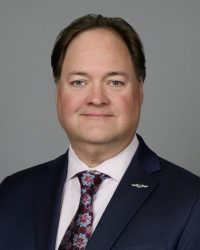 Dr. Darin Detwiler is an internationally recognized leader in food safety and food system integrity. As New Food Magazine’s Distinguished Global Fellow, he brings a global perspective shaped by more than three decades of experience influencing food policy, advising multinational companies, and educating professionals across six continents.
A professor and the author of Food Safety: Past, Present, and Predictions, Dr. Detwiler is a frequent keynote speaker at international summits, industry forums, and government panels. His insights have helped shape food safety modernization efforts and regulatory reforms in countries around the world. He appears in the Emmy Award–winning Netflix documentary Poisoned: The Dirty Truth About Your Food, which continues to fuel global dialogue on food system accountability and consumer protection. His leadership and advocacy have made him a prominent figure in both public discourse and policy development.
With a career that bridges academia, industry, and international diplomacy, Dr. Detwiler is a trusted voice working to elevate food safety as a shared global responsibility—and to inspire a new era of integrity and transparency across the world’s food systems.
Resources
This series is a collaboration with PEP Nexus, the organisation founded by author Darin Detwiler. To access a glossary and other resources that provide additional context for this series, click the Silent Enemies icon below.
Related topics
Contaminants, Food Safety, Health & Nutrition, Hygiene, Outbreaks & product recalls, Pathogens, Rapid Detection, Regulation & Legislation, Sanitation, Supply chain, The consumer, Traceability, World Food



Your article helped me a lot, is there any more related content? Thanks! https://www.binance.com/el/register?ref=DB40ITMB
Can you be more specific about the content of your article? After reading it, I still have some doubts. Hope you can help me. https://www.binance.com/en-ZA/register?ref=B4EPR6J0
Your point of view caught my eye and was very interesting. Thanks. I have a question for you. https://accounts.binance.com/da-DK/register?ref=V3MG69RO
Thanks for sharing. I read many of your blog posts, cool, your blog is very good.
Your article helped me a lot, is there any more related content? Thanks!
Thanks for sharing. I read many of your blog posts, cool, your blog is very good. https://accounts.binance.com/id/register?ref=UM6SMJM3
I don’t think the title of your article matches the content lol. Just kidding, mainly because I had some doubts after reading the article.