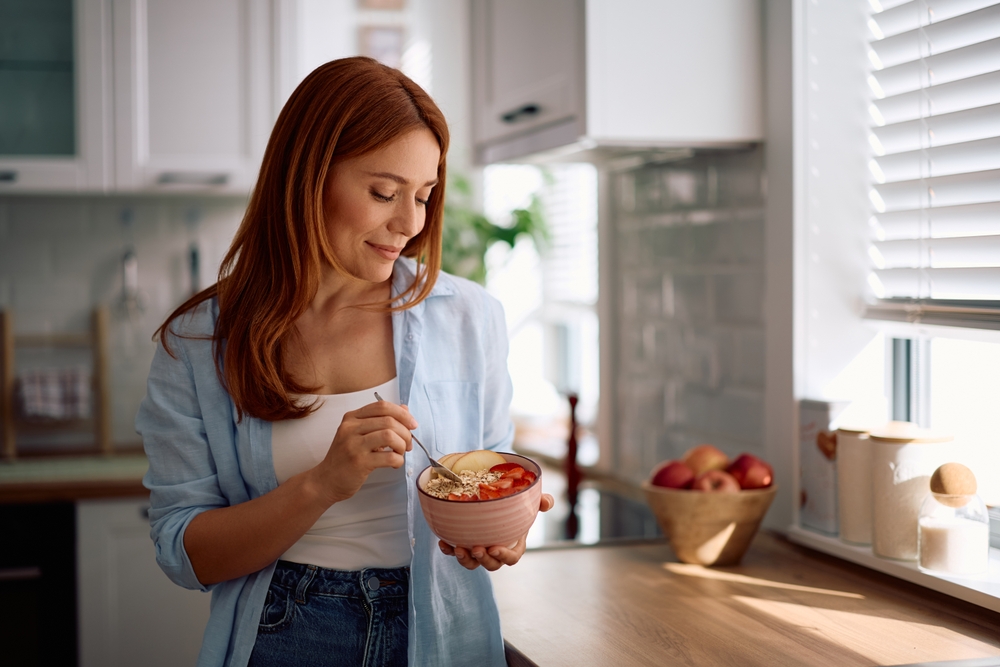
New Tate & Lyle research reveals how GLP-1 users’ food preferences are shifting and where manufacturers can innovate to meet changing expectations.
Tate & Lyle’s study shows GLP-1 users favour foods that balance nutrition with taste, texture and satiety.
Tate & Lyle PLC has unveiled new consumer research showing how GLP-1 medications are altering eating behaviours and creating fresh opportunities for food and beverage manufacturers. The food study, carried out in May 2025 with 500 active and former GLP-1 users across North America, identifies shifting preferences around taste, texture, satiety and nutrition as appetite patterns change.
“GLP-1 medications are redefining the eating experience,” said Anisha Banerjee, Global Insights and Analytics, Tate & Lyle.
GLP-1 medications are redefining the eating experience.”
“Our research reveals how taste, texture and satiety preferences are evolving; and how manufacturers can meet the moment with products that deliver nutrition and genuine enjoyment.”
The company says the findings confirm that GLP-1 usage represents a long-term behavioural shift rather than a passing trend. For manufacturers, this presents scope to lead with healthier innovation and more satisfying, permissibly indulgent formulations.
Changing needs across the GLP-1 journey
The study outlines a behavioural arc of momentum, maintenance and regression that shapes consumers’ needs over time. Current users are seeking what Tate & Lyle describes as a return to “food joy”, favouring indulgent yet nutrient-dense products with comforting textures in smaller portions.
Former users tend to experience a resurgence of appetite and “food noise”. The research suggests that fibre-rich and protein-fortified foods can help support weight-management continuity once medication use has ended.
Texture is emerging as a critical driver of satisfaction. Consumers increasingly favour gentle, airy or crispy textures and layered sensations such as crispy-crunchy-creamy combinations to elevate enjoyment in reduced portion sizes. Studies referenced in the report indicate that texture can influence eating rate, with slower eating linked to greater fullness.
Willingness to adopt healthier dietary habits is also 2.5 times higher among early-stage GLP-1 users, underlining a narrow window for manufacturers to build brand loyalty.
Innovation opportunities
Tate & Lyle says its findings point to two key innovation opportunities for manufacturers. The first is developing products that help former GLP-1 users manage returning hunger through formulations that enhance satiety. The second is creating permissibly indulgent options that pair nutrient density with smaller portion sizes, made more satisfying through smart ingredient and texture design.
“With our deep formulation expertise and a portfolio that spans sweeteners, fibres and plant-based texturants, Tate & Lyle is uniquely positioned to help manufacturers create products that are both healthy and delicious,” said Emma Cahill, Platform Marketing Director, Sweeteners & Fibre.
“We can help our customers make healthy food tastier and tasty food healthier to help consumers on their quest to make new habits stick.”



Can you be more specific about the content of your article? After reading it, I still have some doubts. Hope you can help me.