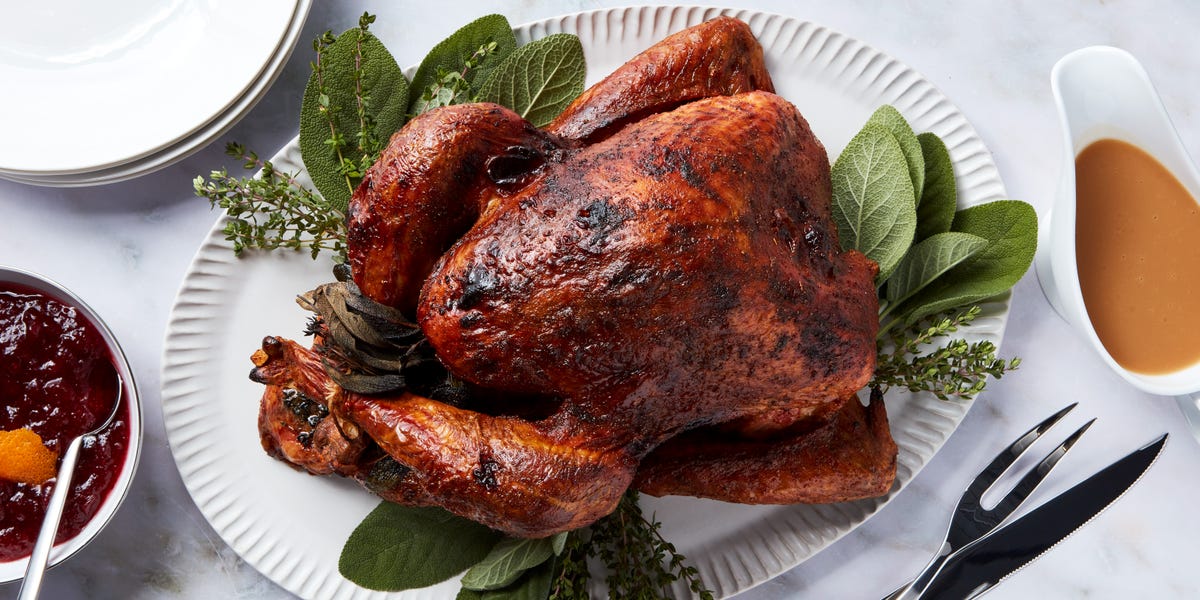

Whether you’re roasting your first bird for Friendsgiving or hosting Thanksgiving dinner for the 26th time, use this handy guide to roast the perfect holiday turkey. I tested this recipe SEVEN times to ensure that this Thanksgiving turkey is the best it can possibly be. Let this be the year you ace Thanksgiving hosting and find your annual go-to guide for everything—roasting time, thawing, the secret to perfectly browned skin—on how to present the perfect roast bird.
How To Make Oven-Roasted Turkey
INGREDIENTS
- Whole Turkey: Most turkeys are sold frozen, but if you can get your hands on a fresh turkey, go for it! This recipe calls for a 12-lb. bird, but if you think you need something larger, check out our handy guide about how much turkey you’ll need per person.
- Kosher Salt: Salt is arguably the second most important part of this recipe because that’s what creates the base for the dry brine. The salt is what forces the moisture from within the turkey, creating a concentrated brine on the surface for the turkey to reabsorb. Don’t skip it! Our recipes are developed with Diamond Crystal kosher salt, but if you have Morton kosher salt, there’s a simple conversion: 1 3/4 tsp. Diamond Crystal kosher salt has the equivalent saltiness to 1 tsp. Morton kosher salt. So for this recipe, you’d need either 1 /4 cup Diamond crystal salt or 2 1/2 Tbsp. Morton salt.
- Black Pepper: Black pepper is the perfect option for a bit of mild spice. Opt for freshly ground black pepper instead of pre-ground to get the best flavor.
- Baking Powder: Adding baking powder to poultry skin helps achieve maximum crispiness by helping the skin expel moisture while roasting.
- Dark Brown Sugar: Brown sugar helps brown the skin and gives a little sweetness to balance the savory flavors.
- Aromatic Spices: Garlic powder, smoked paprika, and onion powder provide intense, savory flavor.
- Dried Thyme: Dried thyme is a classic poultry seasoning, but you can swap in dried rosemary or sage.
- Shallot & Garlic: Shallots and garlic add moisture and release aromatics that infuse the turkey with flavor.
- Lemon: Tossing in a few wedges of lemon to the cavity provides a bit of moisture from the inside out and a faint, fragrant citrus flavor.
- Fresh Sage: Sage is synonymous with holiday cooking. Its earthy, slightly minty flavor complements the seasoning blend and the other aromatics stuffed in the turkey.
- Fresh Thyme: The peppery, woodsy bite of fresh thyme is why I went with this particular herb, but you can sub in more basil if you don’t have any on hand
- Neutral Oil: Choose a neutral oil that can withstand high heat, like canola, vegetable, or safflower oil.
STEP-BY-STEP INSTRUCTIONS
Remove the giblets, trussing, and pop-up thermometers from the turkey. Pat the turkey completely dry inside and out with paper towels. If you plan to cut the wishbone out now, face the turkey neck opening toward you and locate the V-shaped wishbone in the neck cavity. With a sharp and flexible boning knife, using a short but firm swiping motion, gently cut the bone from the breast meat by making long incisions on both sides of the bone. Pry the bone loose with a paper towel or clean kitchen towel and discard. Using your fingers, separate the turkey breast from the skin.
In a spice grinder or mortar and pestle, grind all of the spices until they’re finely ground and well combined. This will allow the spices to adhere to the surface of the turkey, especially the dried thyme.


Cover the entire turkey with the seasoning mix, turning the turkey over to season the back as well. Be sure to season under the breast skin and in the cavity. Transfer the turkey to a roasting rack. Refrigerate, uncovered, until cold, at least 12 hours and up to 2 days.

Arrange a rack in the lower third of the oven with no rack above it; preheat to 450°. Gently pat the turkey with paper towels to remove any excess moisture. Place the shallot, lemon, garlic, fresh thyme, and sage in the turkey cavity and neck opening. Be sure not to overfill the turkey. Err on the side of not stuffing everything in if it doesn’t fit. The turkey cavity needs airflow to cook evenly, and blocking that airflow will result in a longer cook time and a drier turkey. Drizzle the turkey with oil. Insert a leave-in probe thermometer (if using) into the turkey thigh or breast and transfer the roasting pan to the oven.
Roast the turkey for 30 minutes. Reduce the oven temperature to 350°. Continue to roast until the temperature in the thickest part of the breast registers 155° and the thigh registers 165°, about 1 hour and 30 minutes more, up to 2 hours more, rotating once during cooking to help the skin brown evenly. Let the turkey rest, uncovered, for 45 minutes before carving.

Full list of ingredients and directions can be found in the recipe below.
Recipe Tips
Variations
- Roast Turkey Leg: Only feeding a few folks? Skip the whole bird and make just the legs.
- Stuffed Turkey Breast: This is our most indulgent turkey breast recipe, stuffed with bacon, mushrooms, and tons of gooey smoked Gouda cheese.
- Grilled Turkey: This unconventional take on the holiday classic frees up oven space and lends itself to some delicious char marks.
Storage
Store any leftovers in an airtight container in the refrigerator for up to 4 days. Leftovers can also be frozen. Chill any carved turkey in the refrigerator until cold, then transfer to a freezer-safe bag or container and label it with the contents and date. Store in the deepest part of the freezer for up to 6 months.


Can you be more specific about the content of your article? After reading it, I still have some doubts. Hope you can help me.
Can you be more specific about the content of your article? After reading it, I still have some doubts. Hope you can help me.
Thanks for sharing. I read many of your blog posts, cool, your blog is very good.
Your point of view caught my eye and was very interesting. Thanks. I have a question for you.